

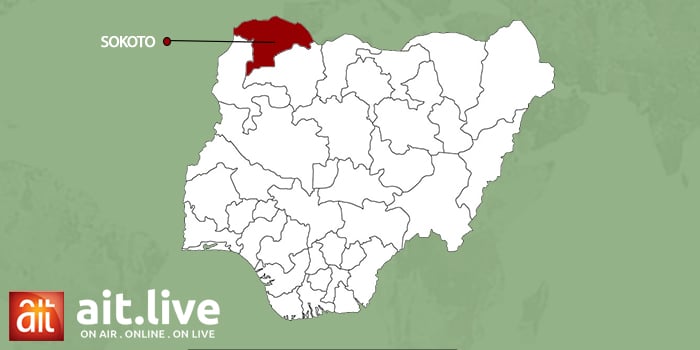
The Sokoto State government has reaffirmed its commitment to the socioeconomic development of women and children in the state.
Through a series of initiatives, spearheaded by the Ministry for Women and Children’s Affairs, the government is making significant strides in empowering women, addressing educational challenges, and tackling gender-based violence.
One such major initiative is the training of 100 women and youths in tailoring and other hand works.
The state’s ministry of women and children affairs is collaborating with the Ministry for Local Government and Community Development and the Office of the Special Adviser on Community Development, on a program aimed at promoting financial independence and socioeconomic growth, by equipping participants with practical skills.
The administration has also empowered 40 women farmers with solar pumping machines to support dry season farming. In addition, each of these women has received a N500,000 cash grant to enhance agricultural productivity, foster economic independence and improve the livelihoods of rural women.
MUST READ: VP Shettima Jets Out To Davos For 2025 World Economic Forum
In furtherance of its commitment to empowering young women, the Ministry for Women and Children’s Affairs is also partnering with the NEEM Foundation to train 200 adolescent girls in various skill acquisition programs.
In the education sector, a collaboration with UNICEF has led to the successful re-enrollment of 1,500 out-of-school children.
The programme is aimed at ensuring that the children receive necessary educational materials to resume their studies and continue their education without hindrances.
The administration has also focused on combating gender-based violence.
The ministry is providing specialized training to 23 women coordinators from local government areas, to equip them to address community issues and provide support for victims of gender-based violence.
Additionally, 300 grinding machines have been distributed to women across the state to support their small-scale businesses and improve their economic well-being.
(Editor: Ebuwa Omo-Osagie)