
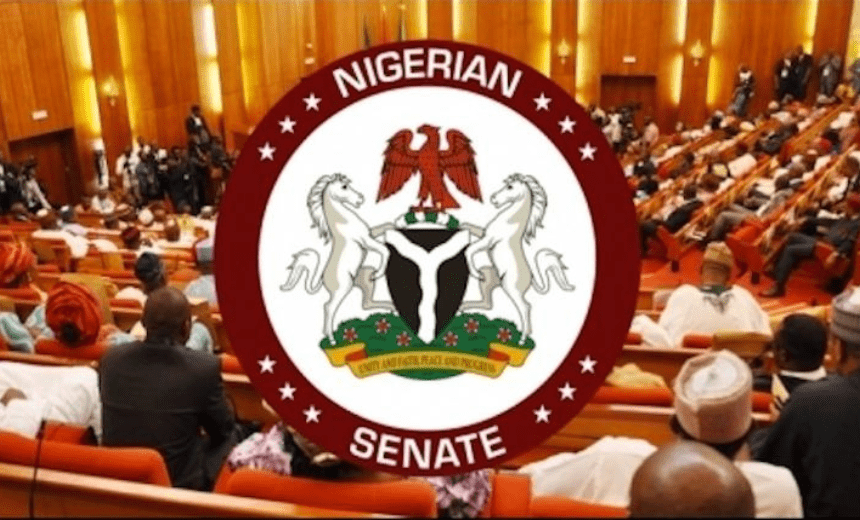
The Senate has advanced a bill that seeks to classify kidnapping and hostage-taking as acts of terrorism, impose death penalty on offenders without the option of fines or alternative sentences, and empower security agencies to trace and forfeit assets linked to the crimes.
Lawmakers are also considering that all sponsors and facilitators of kidnapping, including those providing houses, logistics, or other support, whether civilians or security personnel, be held fully accountable.
They emphasized that kidnappers and their sponsors should face identical penalties.
Titled Terrorism (Prevention and Prohibition) (Amendment) Bill, the legislation is sponsored by all 109 senators and presented by Senate Leader Opeyemi Bamidele (APC, Ekiti Central).
Leading the debate, Bamidele described kidnapping as a pervasive and destructive crime that has evolved from isolated incidents into a commercialized, militarized, and highly coordinated national menace, claiming thousands of lives, crippling businesses, and bankrupting families.
He said the terrorism classification would strengthen operational authority, intelligence capabilities, and prosecutorial powers for security agencies.
The bill aims to deter perpetrators, dismantle kidnapping networks, and place the crime under the terrorism framework, enabling intelligence-led operations, inter-agency coordination, swift pre-trial procedures, and disruption of funding and logistics chains.
Senator Adams Oshiomhole (APC, Edo North) highlighted loopholes in past legislation that allowed offenders to evade full punishment through de-radicalization programs, warning that strict prosecution under the new law is necessary to restore public confidence.
Senator Orji Kalu (APC, Abia North) emphasized that no citizen, civilian, or security personnel should escape justice, while Senator Abba Moro described the bill as a strong deterrent, noting that kidnapping has become a profitable enterprise, with ransom payments often exceeding N100 million.
Moro urged lawmakers to examine root causes while distinguishing between socioeconomic hardship and criminality.
Senator Victor Umeh drew attention to the brutal murders of kidnapping victims and stressed that financial institutions facilitating ransom payments without providing leads must also be held accountable.
Presiding over the session, Senate President Godswill Akpabio reminded lawmakers that national laws supersede all state laws on terrorism.
He directed committees to conduct public hearings and incorporate all recommendations.
Following overwhelming support, the Senate passed the bill for second reading and referred it to the Committees on Judiciary, National Security and Intelligence, and Interior for further legislative work and public hearing, with a report in two weeks.
If enacted, the bill will reshape Nigeria’s counter-kidnapping framework, classify kidnapping as terrorism, enable asset forfeiture, close de-radicalization loopholes, and impose the death penalty as the ultimate deterrent.
(Editor: Anoyoyo Ogiagboviogie)