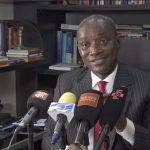


The Senate has confirmed the appointment of retired General Christopher Musa, former Chief of Defence Staff (CDS), as Minister of Defence of the Federal Republic of Nigeria.
The confirmation follows an intense screening session that lasted over three hours, during which Musa was accompanied by more than 15 retired generals.
During the questioning, senators drilled the ex-CDS on a wide range of national security issues, including the challenges posed by bandits armed with sophisticated weapons, the role of technology in intelligence gathering, the need for a reserved army, and the alarming surge in kidnappings and banditry across the country.
General Musa outlined his vision for tackling insecurity, promising decisive action and practical reforms.
He assured the Senate that there will be zero tolerance for negotiations with bandits and that under his watch, criminals will be dealt with decisively and without leniency.
He further proposed amendments to the Constitution to address gaps in the roles of the Defence Minister, Military Chiefs, and the Chief of Defence Staff, ensuring clarity and accountability within the military hierarchy.
One of the most pressing questions raised during the session concerned the withdrawal of troops from the MAGA community in Kebbi State, which preceded the abduction of over 200 schoolchildren.
Musa assured the Senate that the matter would be fully investigated and that all those found culpable would be brought to justice.
He highlighted the high cost of security, noting that a single mid-range missile can cost as much as N150 million, and stressed the need for adequate funding and resources for the military to operate effectively.
The ministerial nominee also emphasized that kinetic military operations account for only 30 percent of the solution to insecurity, calling for a holistic approach that addresses poverty and the root causes of crime.
He further pointed out gaps in the legal system, noting that “we arrest criminals, but nothing comes out of it,” highlighting the need for reforms to ensure swift and effective prosecution of offenders.
On specific policy proposals, Musa called for a unified national database to track offenders, the use of technology in intelligence and operations, and a total ban on illegal mining, which he identified as a major funding source for criminal networks.
He also called for the cessation of ransom payments, which he said only fuels criminality.
In his remarks, Musa reaffirmed his commitment to instill discipline within the military, ensure that farmers can return to their farms safely, and that recruitment into the armed forces will be merit-based and thorough.
He pledged to intensify sensitization campaigns to attract more recruits and suggested that fit retired personnel could be re-engaged to strengthen the military.
Highlighting the collective effort required to secure Nigeria, Musa stressed that “we will work together as a team to secure the nation” and that regional cooperation among states and with neighboring countries is critical to combating cross-border banditry.
He warned that troops waiting to shoot without orders are cowards and stressed the importance of professional conduct across all levels of the security forces.
Addressing broader challenges, Musa underscored that social media misuse must be addressed as part of national security operations and called for multisectoral collaboration beyond the military, involving civil agencies, state governments, and communities.
The Senate has charged Minister Musa to ensure that his tenure lives up to expectations and delivers meaningful results in tackling the nation’s persistent insecurity.