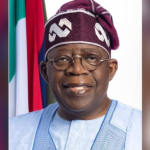


President Bola Tinubu says the 2025 budget implementation faced the realities of transition and competing execution demands
Reeling out the key indicators of the budget, President Tinubu explained that as at Q3 2025, Nigeria recorded ₦18.6 trillion in revenue, representing 61% of the country’s target and ₦24.66 trillion in expenditure, which represents 60% of the target.
Tinubu noted that the extension of the 2024 capital budget execution to December 2025, a total of ₦2.23 trillion was released for the implementation of 2024 capital projects as at June 2025, explaining that the while fiscal challenges persisted, government met its key obligations.
Against all these challenges, the President vowed that 2026 will be a year of stronger discipline in budget execution, disclosing that he has issued directives to the Minister of Finance and Coordinating Minister of the Economy, Minister of Budget and Economic Planning, the Accountant‑General of the Federation, and the Director‑General of the Budget Office of the Federation to ensure that the 2026 Budget is implemented strictly in line with the appropriated details and timelines.
MUST READ: President Tinubu Transmits Revised 2024, 2025 Budgets For Consideration And Passage By The National Assembly
The president says the administration expects improved revenue performance through the new National Tax Acts and the ongoing reforms in the oil and gas sector; reforms, he says are designed not merely to raise revenue, but to drive transparency, efficiency, fairness, and long‑term value in the fiscal architecture.
On Government‑Owned Enterprises, Tinubu directed their leadership to meet their assigned revenue targets, announcing the deployment of end‑to‑end digitisation of revenue mobilisation, standardised e‑collections, interoperable payment rails, automated reconciliation, data‑driven risk profiling, and real‑time performance dashboards to curtail leakages, ensure compliance are verifiable, and remittances are prompt.
These targets, he believes, will form core components of performance evaluations and institutional scorecards as Nigeria can no longer afford leakages, inefficiencies, or underperformance in strategic agencies.
(Editor: Ebuwa Omo-Osagie)