
“One thing about reggae, when it hits you, you feel no pain” – Bob Marley, a reggae superstar (1945-1981).
There is something peerless about reggae when compared with other music genres. It derives its uniqueness from its deep root of promoting social change and justice through its powerful and explicitly conscious lyrics which serve as unifying global voice for the marginalised, oppressed, deprived and voiceless.
While lyrics of multiple music genres these days are drab and flat without any defined message, reggae remains a tool for conscientisation to promote human rights and political emancipation or empowerment as well as continuous civilisation crusade.
This is an attestation to one of the popular saying of another reggae star, Peter Tosh written on marble, “Reggae music is not something that you hear, it’s something you feel.”
From another perspective, reggae is deeply rooted in profound spiritual and ideological standpoint which emphasises African identity, resistant to poverty and economic inequality, racial discrimination, spiritual subjugation and the promotion of the concept of “One Love”, implying unity and equality.
In essence, reggae’s unique power lies in its fusion of authentic cum spiritual ideology with precise socio-economic and political critique, all seamlessly delivered through a universally appealing rhythm that inspires joy, celebration, hope, resilience, reflection, connection and above all inspiration.
Across Africa, reggae is extremely popular and has a deep cultural and social significance serving as a powerful voice and crusading tool for Pan African unity and anti-colonial struggles.
Reggae music stars resonated deeply with African audiences who welcomed them with immense enthusiasm and revered them as African icons.
Perhaps the most iconic example was Bob Marley’s performance at Zimbabwe’s Independence celebration in April, 1980. But before Bob Marley, Jimmy Cliff experienced popular adulation with large crowds gathering for concerts.
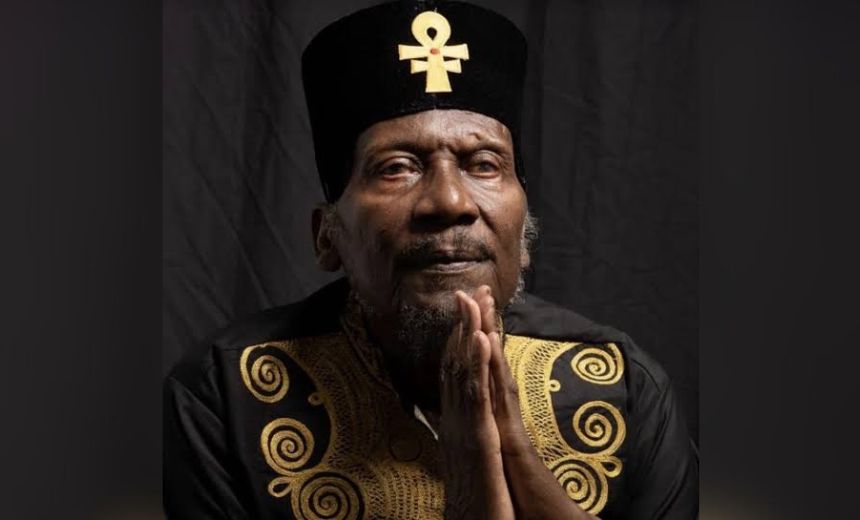
Undoubtedly, he was one of the biggest names in Jamaica, the home of reggae. Born James Chambers but better known professionally as Jimmy Cliff, he started singing at the age of 14, even though he was raised at the country side.
Before the global breakthrough of Bob Marley, Peter Tosh, Bonny Wailer, Toots Hibbert and Burning Spear, Jimmy Cliff was the first Jamaican artiste to gain large international following paving way for a global audience for Jamaican music when it was still largely considered a novelty, deploying music experimentation and cinematic presence.
In 1973, Jimmy Cliff left Island Records, the legendary music label known for its pivotal role in bringing reggae music to the global stage and signed a new deal with EMI, which the following year in December 1974, 51 years ago, decided to sponsor him on a continental playing tour of Africa.
His first port of call was Zambia. His next stop was Nigeria. It was his first ever trip to Africa at a period Nigerians were healing from the devastatingly heartrending wounds inflicted by avertable civil war.
His presence was therefore not just for joyful music tour but a powerful statement of solidarity. He came to Nigeria for a two-week festival of musical excitement for lovers of reggae music.
In Lagos, then Nigeria’s capital which was his first arrival point in the country, Jimmy Cliff was received by a Mammoth crowd at the then Ikeja airport, now Murtala Mohammed International Airport.
Tens of hundreds of people lined the streets leading to his hotel.
His first show was at the National Stadium, Surulere, Lagos.
The sheer numerical magnitude of the crowd effectively communicated the impressive scale, intensity and security challenge this posed, prompting strict measures to ease pressure and guarantee safety of lives.
It was a superb performance which drew appreciable applause from his enthusiastic fans. He played with his band members in then Nigeria’s swinging entertainment spots in Southern cities.
His next destination was the Northern cities beginning from the home of tourism, Jos, where a tidal wave of humanity danced to his popular hits. Jimmy Cliff’s next stop was the ancient city of Kano.
By a programme prepared, a sea of faces was billed to watch him perform at the spacious King’s Garden in Brigade Quarters of Kano Metropolis where the legendary U.S Africa American Star, James Brown was received with great ardor by a large crowd of fans four years earlier, by December 1970 to be precise, when he visited Nigeria as part of a global tour.
Kano was particularly fascinating to Jimmy Cliff. The historic city is noted for its arts, rich culture and strong Islamic base, a religion he embraced a year earlier in 1973 with the adoption of the name El-Hadji NaimBachif on the counsel of Sheik MourtadaMbake of Senegal.
He arrived Kano from Jos on Friday, December 13, 1974 and was billed for his show the next day. It was during the seasonal harmattan. Several people were prepared to endure the distinctive weather phenomenon that brought intense cold and dry air.
Instead of contending with the seasonal weather, cheerless news spread like the harmattan wind in the early hours of the day slated for the concert that Jimmy Cliff at exactly 8.00pm (Nigeria Time) on the day of his arrival was arrested at his Central Hotel, Kano, room and whisked away to the then Kano Police Command Headquarters in Bompai District of Kano Metropolis.
Like a swarm of bees, his fans thronged the Police Headquarters.
This reporter was not a journalist then. Even as a student at the then Kano School of Extra Mural Studies, I witnessed the event of that day.
The then Kano State Commissioner of Police, G. Ezekwem calmed the restive crowd and explained that his arrest was sequel to an order of a Lagos High Court which included a warrant of arrest. He was swiftly moved to Lagos to keep a date with the Court.
Except on rare occasions, courts don’t sit on Saturdays and Sundays in Nigeria. Jimmy Cliff therefore spent three days in police cell, one day in Kano and two days in Lagos, before appearing in court on Monday, December 16, 1974.
In the court, it became clear that his arrest stemmed from a contractual dispute with a Nigerian Music promoter identified as Alhaji R. Osi Ibrahim who claimed he signed a contract with Jimmy Cliff in 1971 to bring the reggae star to Africa.
He alleged that the agreement was breached and Jimmy Cliff came to Nigeria four years later through a different promoter. He was claiming N80,000 an amount which at the exchange rate then was a huge sum of money.
The allegation of the promoter however turned out to be false. It was purely a phantom plot which has no basis or supporting facts and figures.
But sadly, he was incarcerated which effectively cut his tour short, preventing him from fulfilling the rest of his itinerary which included the planned shows in other Nigerian cities such as Zaria and Kaduna among others where he had a huge fan base.
The next day, Tuesday, December 17, 1974, Justice Michael Adeyinka Odesanya (1914-2009), in a furious mood, first revoked the warrant of arrest and set him free.
He also dismissed the suit because the complainant did not provide any verifiable evidence to validate his claim.
There are several pithy adages in the pouch of proverbs in Africa. One of them my memory recalls “The axe forgets but the tree remembers”. The agonising experience of Jimmy Cliff left a profoundly painful impression on him.
Two years after his arrest, incarceration and legal brouhaha in Nigeria, he lamentably chronicled his ordeal in a song “The News” with lyrics such as, I was in Africa, down in Nigeria, Oh, they threw me in jail. I had one hell getting bail.
They scandalising my name. they want to make me look shame, because I got little fame. It started by some liar. Spreading like wide fire. Propaganda all around. News believed in every town.
While retelling this 1974 incident, it stirred certain deductions about business practice, legal procedures and local dynamics then and even now.
First, it highlights that visiting famous music stars or investors can be vulnerable or be subjected to potential manipulation of corrupt local systems for selfish or opportunistic gains.
Secondly, a promoter of an event or tour can successfully disrupt a rival’s business deal out of envy or petty considerations.
The incident also spotlights a potential flaw in the legal process which allowed an innocent person to be punished but a false accuser went away unpunished.
These were however two cheerful developments.
The warm welcome Jimmy Cliff received from thousands of fans who enthusiastically trooped out to receive him in the few cities where he held his shows provided “sweet” counterpoint to the “bitter” legal dispute, even though the court outcome showed that the system worked to dismiss baseless claim, an indication that justice could prevail.
Several years before Jimmy Cliff breathed his last, he proclaimed his love for Nigeria and admiration for her atmosphere and the energy of her people.
Jimmy Cliff died on November 24, 2025, at the age of 81 in Kingston, Jamaica. Farewell, father of reggae.
(Editor: Terverr Tyav)