
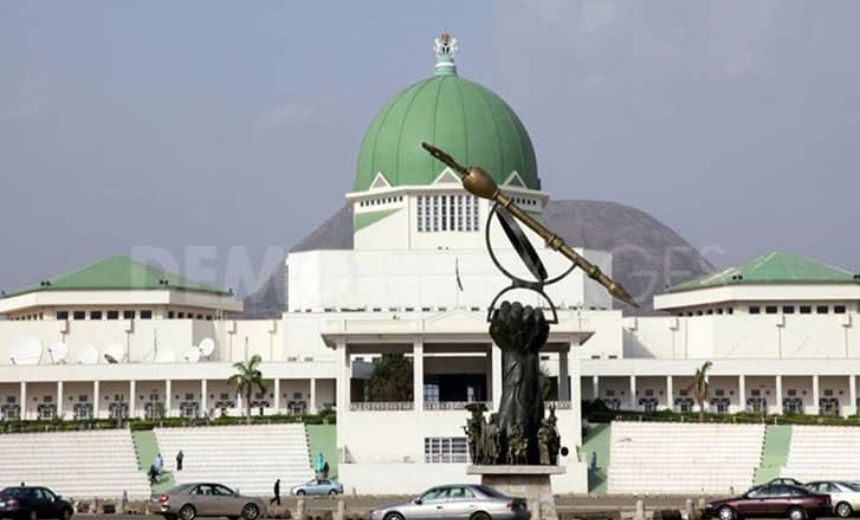
Senate has approved the repeal and re-enactment of the 2024 and 2025 Appropriation Acts of the Federal Government.
The move is expected to end the confusion created by the extension of 2024 budget implementation into 2025 and restore order to the national budget calendar.
Lawmakers explained that by the end of March 2026, the implementation of the capital components of both the 2024 and 2025 budgets would have been fully concluded, ensuring clearer timelines and improved fiscal discipline.
The approval follows the adoption of the report of the Joint Senate Committee on Appropriations at plenary.
Presenting the report of the Senate Committee on Appropriations, Solomon Olamilekan explained that the bill seeks to repeal the 2024 Appropriation Act with a total expenditure of N43.5 trillion.
Of this amount, N8.2 trillion was earmarked for debt servicing, N11.2 trillion for recurrent (non-debt) expenditure, while N22.2 trillion was allocated to the Development Fund for capital expenditure for the year ending December 31, 2025.
The Senate also repealed the 2025 Appropriation Act with a total expenditure of N54.9 trillion.
The breakdown includes N3.6 trillion for statutory transfers, N14.3 trillion for debt servicing, N13.5 trillion for recurrent (non-debt) expenditure, and N16.7 trillion for capital expenditure through contributions to the Development Fund for the year ending March 31, 2026.
MUST READ:NASS Blames Budget Delays On Procurement Process, Promises Faster 2025 Budget Roll Out
The committee disclosed that it held consultations with the President’s economic management team, comprising the Minister of Finance and Coordinating Minister of the Economy, the Minister of Budget and Economic Planning, and the Director-General of the Budget Office of the Federation.
He added that the meeting was convened to gain further insight into the justification for the repeal and re-enactment of the two budgets at this time.
The committee noted that the repeal and re-enactment bills are aimed at balancing responsiveness with fiscal responsibility, ensuring that urgent expenditures do not undermine legislative oversight or fiscal prudence.
It also expressed concern that the continued practice of running multiple budget cycles concurrently such as extending the implementation of the 2024 budget deep into 2025 while the 2025 budget is already in force weakens budget clarity and fiscal discipline.
The House of Representatives has also passed the 2024 and 2025 Appropriation (repeal and re-enactment) Bills and extended the implementation of the capital component to March 31, 2026
This follows the adoption of a report by chairman of the House Committee on Appropriation, Abubakar Bichi
The first bill seeks to repeal the 2024 Appropriation Act with a total expenditure of N43.5 trillion with N8.2 trillion earmarked for debt servicing, N11.2 trillion for recurrent (non-debt) expenditure, while N22.2 trillion allocated to the Development Fund for capital expenditure for the year ending December 31, 2025.
For the second bill, the House repealed the 2025 Appropriation Act with a total expenditure of N54.9 trillion with 3.6 trillion naira allocated for statutory transfers, N14.3 trillion for debt servicing, N13.5 trillion for recurrent (non-debt) expenditure, and N16.7 trillion for capital expenditure through contributions to the Development Fund for the year ending March 31, 2026.
In his presentation, the Appropriation Committee chairman, Abubakar Bichi told his colleagues that the committee met with the economic team of the President to get insight into the reason for the repeal and re-enactment of the 2024 and 2025 Appropriations Act.
Bichi explained that the repeal and re-enactment of the 2025 budget will help balance responsiveness with fiscal responsibility, ensuring that urgent expenditures do not weaken legislative oversight or undermine fiscal freedoms.
According to him, N16.765 trillion was reduced from the 2025 capital allocation and rolled over to 2026 fiscal year due to funding constraints, admitting that the practice of rolling budget cycles, such as extending the implementation of the 2024 Appropriation Act deep into 2025 while the 2025 budget is in force, undermines budget clarity and weakens fiscal discipline.
Both bills were considered by lawmakers and passed.
(Editor: Terverr Tyav)