

Nigeria’s education sector stands at a critical crossroads—marked by a year of high-stakes experimentation and deep-seated systemic friction.
From the rollout of the ambitious Student Loan Scheme to the persistent shadow of school abductions, the last twelve months of 2025 have tested the resilience of students and policymakers alike.
While the government points to curriculum overhauls and increased funding as signs of progress, organized labour and security experts warn that the foundation remains shaky.
In our 2025 Year-End Review, Senior Education Correspondent Abulu Osemuaghu takes a deep dive into the policies that defined the year and the hurdles that lie ahead in 2026.
For millions of Nigerian children, 2025 was a year where the classroom often felt more like a frontline than a sanctuary.
The statistics remain grim. Over 1,600 students have been seized by gunmen since 2014, and this year added new names to that tragic list.
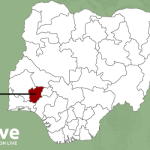
In Niger State, 303 students and 12 teachers were snatched from St. Mary’s Catholic School in Papiri. Just weeks later, 25 schoolgirls were taken from a secondary school in Maga, Kebbi State.
These are not just numbers; they represent a calculated assault on the future by bandits and insurgents seeking ransom and relevance.
The fallout is measurable. UNICEF reports that one in three Nigerian children is currently out of school, with the North-East and North-West regions bearing the brunt of the crisis.
While the National Commission for Almajiri and Out-of-School Children offers slightly different figures, the consensus is clear: the gap is widening.
The government’s “Safe Schools” initiative, involving military-led rescues, has been dismissed by critics as reactive—rather than preventative.
In an attempt to modernize amidst the chaos, the Federal Ministry of Education unveiled a revamped curriculum for primary and secondary schools. The goal: to align Nigerian students with global trends in climate change and digital technology.
Significantly, History was reintroduced as a standalone subject, an effort to ground the next generation in their national heritage.
Also, the Nigerian government stepped up efforts to boost technical, vocational education and training with its TVET programme
At the tertiary level, the barriers to entry were lowered—at least on paper. Mathematics was removed as a strict prerequisite for certain humanities courses, though it remains a core requirement for graduation. This coincided with the much-anticipated launch of the Nigerian Education Loan Fund.
But the Student Loan became a lightning rod for controversy, plagued by technical glitches, allegations of favoritism, and agonizing delays in disbursement.
The digital transition also faced a reality check. Following a major technical meltdown at JAMB that nearly cost the Registrar his job, the government issued a bold directive: all WAEC and NECO senior school exams must be Computer-Based by 2026. This comes despite a disastrous English paper in 2025, where students in some states were forced to write by flashlight after late deliveries and leaked papers forced late-hour reprints.
On the labour front, ASUU returned to the trenches, followed by protests from SSANU and NASU over welfare and funding.
Polythecnic lecturers are also on the warpath, accusing regulators of illegal outsourcing of accreditation—a move they say violates the Polytechnic Establishment Act.
To douse the flames, the government unveiled the Tertiary Institutions Staff Support Fund—a zero-interest loan scheme for staff—but union leaders remain unimpressed.
Financially, the 2025 education budget hit three-point-five-two trillion Naira. While this is more than double the 2023 allocation, it represents only seven percent of the national budget—well below the UNESCO recommendation of fifteen to twenty percent.
Projections for 2026 show a similar trend, with education’s share of the pie actually shrinking to six percent of the total N58trn budget.
As schools prepare to reopen in the second week of January, the atmosphere is one of cautious anxiety. With new tax laws set to take effect in January 2026, parents are bracing for a potential hike in tuition and living costs.
For the education sector, 2026 will not just be about new policies—it will be about whether the government can finally turn promises into protection and funding into results.
Editor: Ebuwa Omo-Osagie