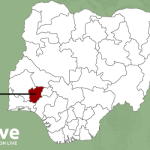


Just as the Academic Staff Union of Universities, ASUU, and the Federal Government entered into another agreement, it is not so with Niger State owned Ibrahim Badamasi Babangida University, Lapai as the Joint Action Committee, JAC, Congress has declared a two-week warning strike over outstanding agreements and welfare Issues.
According to JAC, their resolve to commence the warning strike follows the expiration of statutory ultimatums issued to the Niger State Government and the university authorities over unresolved salary, allowance and welfare matters.
The decision was made at an emergency congress of academic and non-academic Staff unions at the university, following consideration of a memo from the Niger State Ministry of Tertiary Education and a review of earlier engagements with the government.
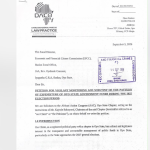
Reading the ministry’s letter dated January 13, 2026, the JAC Secretary, Stephen Ibrahim, informed the congress that the correspondence, signed by the Permanent Secretary, Sirajo Sa’id, was titled: “Seven-Day Automation on Outstanding Demands by In-House Unions.”
The letter stated that a follow-up meeting was held on January 12, 2026, between the ministry and the university management. The following resolutions were reached: the university management agreed to pay a N20,000 wage award to all staff.
Others are that a sum of N4.6 million was approved for the IBBUL-ASUU Development Project and that the university committed a substantial amount towards the payment of Earned Academic Allowance, EAA, arrears which the ministry undertook to source additional funds to augment the university’s commitments.
The letter further noted that discussions would continue on: Consequential salary adjustment arrears from 2021 for all staff, Full mainstreaming of EAA for academic staff, and Implementation of consequential salary adjustments and related issues.
The ministry assured the unions of its continued support and collaboration in resolving the outstanding matters.
Reacting to the contents of the letter, the JAC leadership stated that while the commitments were acknowledged and appreciated, the absence of clear timelines and the long history of unimplemented agreements necessitated further action in line with labour law.
The congress noted that successive ultimatums, including 21-day and 14-day notices, had elapsed without full resolution of issues such as minimum wage implementation, consequential adjustments, unpaid allowances, and unremitted cooperative and welfare deductions.
After deliberations, the Congress moved a motion, and it was seconded that the unions declare a two-week warning strike as a final opportunity for the government and the university management to make concrete, time-bound commitments.
The Congress, therefore, resolved that a two-week warning strike be declared, with the understanding that if outstanding demands are not satisfactorily addressed within the period, the unions will proceed on an indefinite strike in accordance with established labour procedures.
(Editor: Terverr Tyav)