
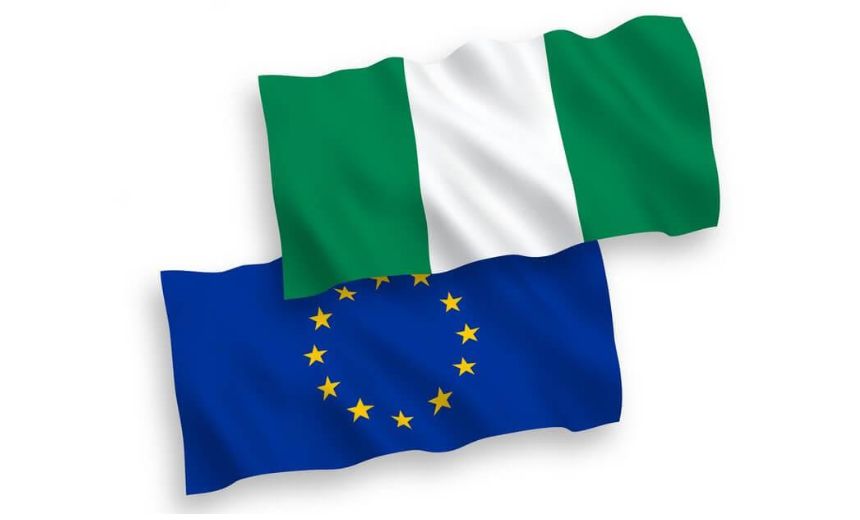
European Union has officially removed Nigeria from its high-risk list for money laundering and terrorism financing.
The designation had, for years, forced European banks and business partners to apply enhanced checks and stricter documentation on transactions involving Nigerian entities, a situation analysts say slowed trade and raised the cost of cross-border business.
The move is a major boost for Nigeria’s global financial standing as the European Union removal of the country from its list of high-risk financial jurisdictions
is expected to ease trade, reduce transaction bottlenecks, and strengthen investor confidence.
This development follows another key milestone in 2025, when Nigeria exited the Financial Action Task Force, FATF grey list, signalling a renewed level of trust in the country’s financial integrity.
Reacting to the development on her social media handle, the Minister of State for Finance, Dr. Doris Uzoka-Anite described the decision as a major boost to investor confidence, and a clear signal that Nigeria’s financial system now meets international anti-money laundering and counter-terrorism financing standards.
Nigeria’s removal from the EU high-risk list builds on a landmark achievement in October 2025, when the country was officially taken off the FATF grey list of nations under increased monitoring for weaknesses in financial oversight.
That delisting according to the government followed more than two years of reforms across the banking sector, law-enforcement agencies, and regulatory institutions including stronger anti-money laundering frameworks and improved transparency standards.
Experts say the combined impact of both decisions is significant as banks and businesses are now expected to face fewer barriers in processing international payments, while compliance costs , previously inflated due diligence, are likely to decline.
Foreign investors, who had remained cautious due to perceived risks are now expected to reassess Nigeria as a more credible and attractive investment destination.
Economists add that the renewed confidence could stimulate trade, attract portfolio inflows, and help stabilise the naira, which recorded improved liquidity following Nigeria’s exit from the FATF grey list.
For local businesses, the development also promises smoother access to global markets and reduced transaction friction, a shift that could further integrate Nigeria into global value chains.
However, analysts caution that sustained reforms remain critical. They note that removal from these lists does not mean financial risks have disappeared, but rather reflects measurable progress in addressing them.
In summary, Nigeria’s exit from both the EU high-risk register and the FATF grey list marks a turning point, offering renewed investor confidence, wider access to global finance, and a stronger signal that the country is committed to financial transparency and economic reform.
(Editor: Terverr Tyav)