
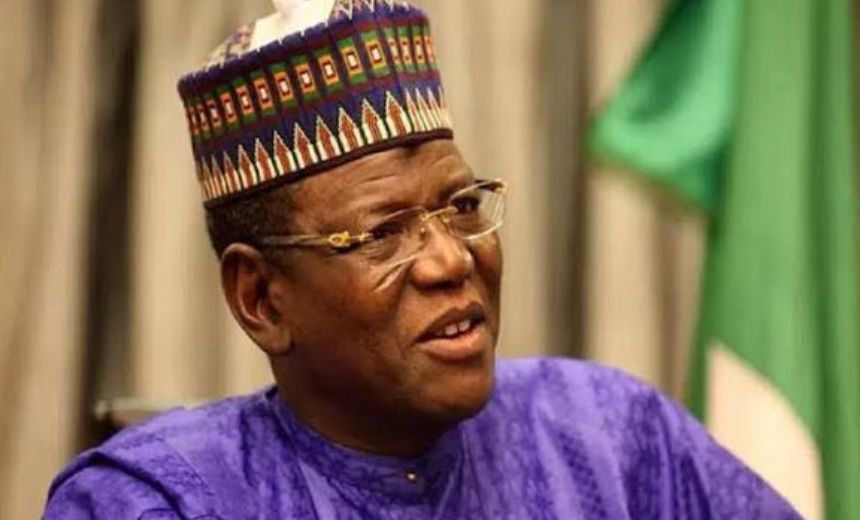
The Supreme Court has dismissed the appeal of Aminu Sule Lamido challenging the decision of the trial court, which convicted him for failing to declare $40,000 at an airport.
In a unanimous decision, the apex court panel presided by Justice Inyang Okoro dismissed the appeal of the son of former governor of Jigawa on grounds that it lacked merit.
The Operatives of the Economic and Financial Crimes Commission, EFCC, arrested Aminu on December 11, 2012, at the Mallam Aminu Kano International Airport while preparing to travel to Cairo, Egypt.
The prosecution said Aminu declared $10,000 to the Nigeria Customs Service, but was found with an additional $40,000, which was not disclosed on his currency declaration form.
The EFCC charged him before the federal high court in Kano on a one-count offence of false declaration of foreign currency, contrary to provisions of the Money Laundering (Prohibition) Act.
On July 12, 2015, the federal high court convicted Aminu and ordered him to forfeit 25 percent of the undeclared sum to the federal government.
Dissatisfied with the ruling, Aminu approached the court of appeal in Kaduna to overturn the conviction and set aside the forfeiture order.
MUST READ: Supreme Court says Ex-Jigawa Gov. Lamido, sons have case to answer
However, in a judgement delivered on December 7, 2015, the court of appeal dismissed the appeal.
The Supreme Court had earlier dismissed the decision of the court of appeal that cleared the former Jigawa State governor, Sule Lamido, and his sons, Mustapha and Aminu of charges of fraud allegations.
The Supreme Court upheld the decision of the trial court which dismissed the no-case submission filed by the Lamidos and held that the defendants had a case to answer.
The apex court however ordered that the matter be referred back to the trial court for continuation of trial.
The EFCC had accused Lamido, who served as Jigawa state governor from 2007 to 2015, of laundering 1.35 billion Naira.
The agency alleged that the funds were received as kickbacks from contractors handling state government projects.
The trial commenced in 2015, with the EFCC calling more than 16 witnesses before closing its case.
Rather than open their defence, the defendants filed a no-case submission, contending that the prosecution had failed to establish any offence.
The trial judge Justice Ojukwu dismissed the no-case submission and held that the defendants had a case to answer
(Editor: Ebuwa Omo-Osagie)