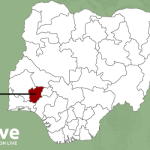



The Nigeria Export Processing Zones Authority (NEPZA) has approved and issued a Free Trade Zone (FTZ) license to Harvestfield Industries to enable local manufacturing of next-generation long-lasting insecticidal bed nets in Sagamu, Ogun State.
This marks a major milestone for Nigeria’s health security, industrial growth, and shift from import dependence to domestic production.
The license, facilitated by the Presidential Initiative on Unlocking Healthcare Value Chain (PVAC), supports a landmark technology transfer arrangement anchored by SNG Health—a joint venture between Vestergaard and Harvestfield Industries—to locally manufacture dual-active-ingredient (dual-AI) bed nets in Nigeria.

Speaking to journalists after the brief ceremony, PVAC’s National Coordinator, Dr. Abdu Mukhtar said the initiative aligns with President Bola Ahmed Tinubu’s agenda to expand local manufacturing, deepen health sovereignty, and build a more resilient national health system. He noted that the “the FTZ license strengthens Nigeria’s ability to protect lives, build skilled jobs, and secure reliable access to a critical malaria prevention tool—made in Nigeria, for Nigerians and the region,”
NEPZA Managing Director, Dr. Olufemi Ogunyemi, during the signing ceremony, stated that “NEPZA’s mandate is to enable investments that translate into real production, jobs, and long-term value. The license supports a national health-security priority and demonstrates how the Free Trade Zone scheme can accelerate manufacturing that matters.”
Harvestfield Industries Board Member Mr. Martins Awofisayo added, “Through SNG Health’s partnership with Vestergaard, the company will bring world-class manufacturing into Nigeria—creating jobs, transferring capability, and delivering next-generation bed nets that help protect families.”
Following the December 2025 groundbreaking, the Sagamu facility is progressing toward operations in 2026, with a target to scale to 10 million next-generation dual-AI bed nets annually within three years, create over 600 jobs, and serve Nigeria’s needs through public procurement, donor procurement, private market channels, and exports across the region.
Malaria remains a major threat to lives and productivity. Bed nets are one of the most effective prevention tools. Local production in Sagamu is expected to strengthen supply reliability, reduce exposure to global disruptions, and build durable industrial capacity that supports Nigeria’s health security—now and for the long term.