

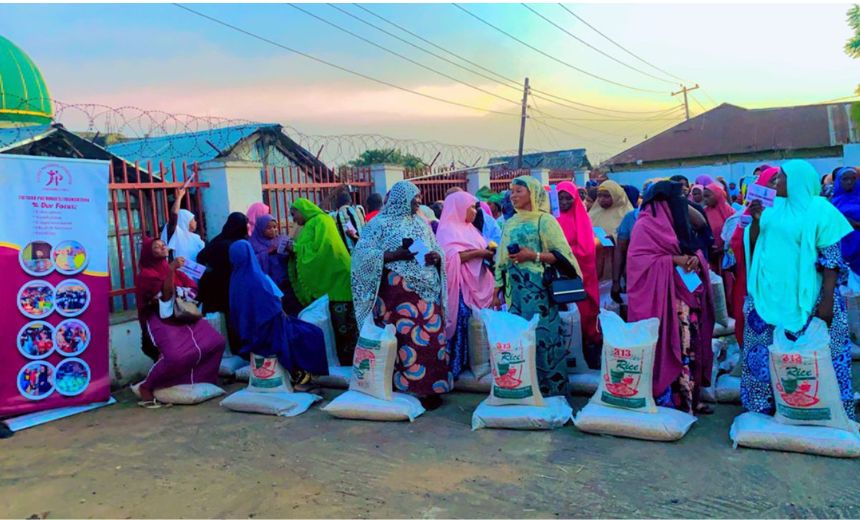
In a demonstration of sustained humanitarian commitment and grassroots impact, the Future Pathways Foundation has distributed Sallah packages to over 1,000 families across Niger State.
The intervention, spearheaded by the foundation’s founder, Hajia Saadatu Sani Musa, involved the distribution of essential food items to households grappling with the pressures of rising living costs and economic uncertainty.
Each beneficiary family received a comprehensive food package comprising a 25kg bag of rice, 25kg of beans, and 25kg of millet—items carefully selected to support household consumption during the Sallah festivities and beyond.
The foundation noted that the intervention forms part of a broader statewide outreach aimed at reaching vulnerable populations and cushioning the effects of economic hardship across Niger State.
Speaking during the exercise, Musa reiterated the foundation’s commitment to providing consistent social support, particularly during culturally significant periods such as Sallah.
“This initiative reflects our sustained effort to alleviate hardship and promote shared prosperity within communities across Niger State,” she said. “Sallah is a time of compassion, and we are determined to ensure that more families can celebrate with dignity.”
She further explained that the foundation’s interventions are structured not merely as seasonal relief but as part of an ongoing engagement strategy designed to improve community welfare across the state.
Beneficiaries expressed appreciation for the gesture, describing it as timely and impactful, particularly in light of prevailing economic challenges. Many noted that the packages would significantly ease the burden of providing for their families during the festive period.
Observers note that amid rising food costs and inflationary pressures, initiatives of this nature play a critical role in strengthening informal social safety nets and reinforcing communal solidarity.
The Future Pathways Foundation has continued to expand its humanitarian footprint across Niger State, with a growing reputation for consistency in food support initiatives, community development programmes, and targeted assistance to vulnerable groups.