


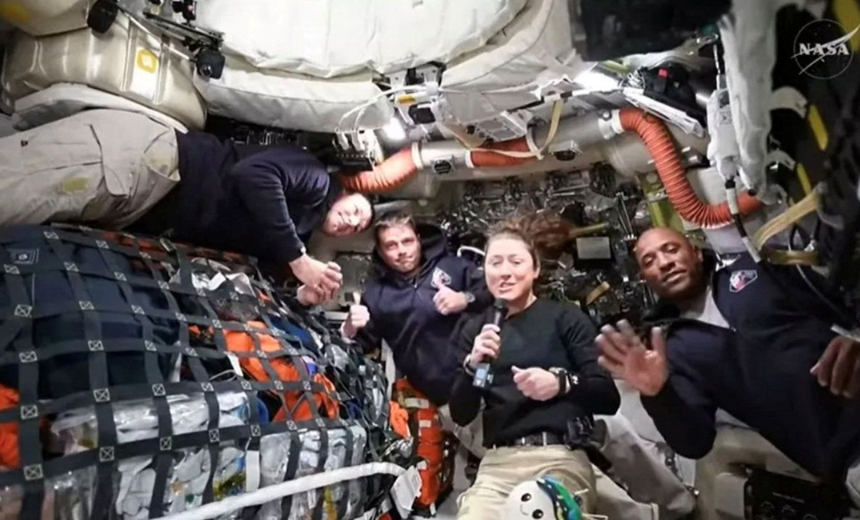
The Artemis II astronauts are on the final leg of their journey home after completing a historic lunar flyby that carried them farther from Earth than any humans have travelled before.
Although the four-person crew did not land on the Moon, the mission marks a major step toward future human landings set to be the first since the 1960s and 1970s.
The astronauts are scheduled to splash down in the Pacific Ocean, off the west coast of the United States, at 20:07 Eastern Time today, Friday, April 10.
The dramatic conclusion to the 10-day mission will begin with the separation of Orion’s crew capsule from its service module, followed by a fiery re-entry through Earth’s atmosphere, a process expected to take about 42 minutes.
Re-entry and splashdown are considered the most dangerous phases of the mission. During this time, the Orion capsule will endure temperatures of nearly 2,760°C—about half as hot as the surface of the Sun.
Experts have raised concerns about Orion’s reentry speed of approximately 38,000 kilometres per hour, more than ten times faster than a bullet, and the performance of its AVCOAT heat shield.
During the Artemis I mission, the shield showed unexpected wear, prompting questions about how it will behave under the extreme conditions of a crewed return, analysts have cautioned that, the dangers of reentry could become difficult to survive.
Despite these concerns, anticipation remains high around the world.
All eyes now turn to the Pacific as Artemis II nears its final moments, closing one historic chapter while opening the door to humanity’s return to the lunar surface.
(Editor: Ebuwa Omo-Osagie)