
As climate change intensifies across Nigeria, from devastating floods to rising temperatures and shrinking water sources, experts say the media must play a stronger role in helping citizens understand the risks and the solutions.
At a two-day specialised media training in Abuja, journalists were urged to move beyond headlines and begin telling the deeper human stories behind climate change and environmental pollution.
Across the world,
Rising temperatures, devastating floods, prolonged droughts and food insecurity are already disrupting lives and livelihoods.
At the same time, mercury pollution and other hazardous chemicals continue to quietly contaminate air, water and soil, often affecting the most vulnerable communities, including women, children, farmers and artisanal miners.
Facilitators at the training on climate governance under the United Nations Framework Convention on Climate Change and the Minamata Convention on Mercury say journalists must help bridge the gap between science, policy and everyday realities.
Priscilla Achakpa,
Founder and Global Lead, Women Environmental Programme says
“Environmental communication must go beyond headlines. It must connect science to everyday realities, simplify complex issues without losing accuracy, elevate community voices and most importantly inspire action.”
Other Speakers at the training stressed that journalists have a critical responsibility to ensure governments remain accountable for environmental commitments and climate policies.
They also called for stronger collaboration between government institutions, the media and civil society to improve access to credible environmental data and
strengthen public awareness.
“Journalism is the bridge between scientific knowledge and public consciousness. Scientists can publish reports and governments can make policies, but without journalists translating these realities into human understanding, public mobilisation becomes difficult.” Sam Onuigbo,
Former Federal Lawmaker and Sponsor, climate Change Bill added.
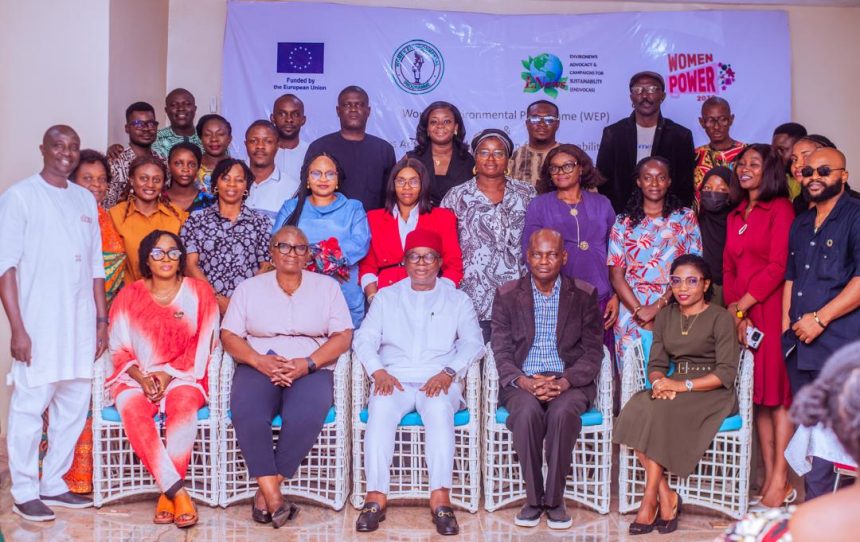
The training convened by EnviroNews Advocacy and Campaigns for Sustainability in collaboration with the Women Environmental Programme brought together representatives from government agencies, environmental organisations, civil society groups, and media institutions to foster dialogue aimed at advancing environmental sustainability in Nigeria.
By strengthening media understanding of global frameworks like the United Nations Framework Convention on Climate Change and the Minamata Convention on Mercury, organisers believe journalists can better translate complex environmental policies into stories that inform, empower, and inspire action.
Because when the media gets the story right, communities are better equipped to demand solutions and protect their environment for generations to come.
(Editor: Nkoli Omhoudu)