

From political allies to fierce rivals, the crisis between Rivers State Governor, Siminalayi Fubara and his former political benefactor, Nyesom Wike, has evolved into one of the most dramatic political battles in recent Nigerian history.
We take an in-depth look at the prolonged power struggle that polarised Rivers State, divided the State House of Assembly, led to the declaration of a state of emergency, and ultimately culminated in Governor Fubara’s withdrawal from the governorship race under the All Progressives Congress, APC, less than 24 hours before the party primaries.
The political journey of Rivers State Governor, Siminalayi Fubara, has been one marked by turbulence, intense power struggles, shifting alliances, and one of the fiercest political battles in recent history in Rivers State.
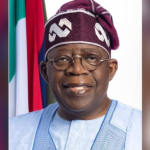
What began as a smooth transition of power between a political godfather and his trusted ally eventually degenerated into a bitter, prolonged supremacy war that shook the foundations of governance in the oil-rich state, polarised the political class, and drew the intervention of President Bola Tinubu.political
Governor Fubara emerged as governor in 2023 on the platform of the Peoples Democratic Party, PDP, with the full backing of his predecessor and former political benefactor, Nyesom Wike, who had completed two terms as governor before he was appointed Minister of the Federal Capital Territory, FCT.
At the outset, many believed the relationship between the two men would remain cordial, given the role Wike played in Fubara’s emergence.
Fubara himself had served under Wike as Accountant-General of Rivers State and was widely seen as a loyal political ally.
However, less than 100 days into the administration, cracks began to emerge within the political structure as disagreements over control of the political machinery reportedly created tension between both camps.
The crisis soon exploded into the open when members of the Rivers State House of Assembly loyal to Wike, led by the Speaker, Martin Amaewhule, initiated moves widely interpreted as an attempt to weaken the governor politically.
The Assembly became sharply divided, with lawmakers splitting into rival factions.
The pro-Wike lawmakers maintained pressure on the governor through legislative actions, threats of impeachment, and political confrontations, while another faction loyal to the governor attempted to preserve his hold on power.
The political atmosphere in Rivers State rapidly deteriorated.
Tensions heightened after the demolition of the Rivers State House of Assembly complex following a fire incident that further deepened suspicion and hostility between both camps.
The conflict soon spilled into the courts, party structures, local government administration, and virtually every arm of government in the state.
Political rallies and public statements from both sides only worsened the already volatile situation.
For months, governance in Rivers State became overshadowed by political uncertainty as the governor battled to retain authority amid sustained opposition from lawmakers aligned with his former political benefactor.
Several attempts were made by stakeholders and elders in Rivers State to broker peace, but none yielded lasting results as distrust between the camps continued to widen.
The intervention of President Tinubu eventually became inevitable as fears grew that the escalating political crisis could destabilise the state and threaten security in the Niger-Delta region.
President Tinubu summoned key actors in the dispute, including Governor Fubara, the FCT Minister Nyesom Wike, and members of the Rivers State House of Assembly, in a bid to restore peace and political stability.
Following high-level meetings at the Presidential Villa, agreements were reportedly reached aimed at ending hostilities, recognising the legitimacy of the Amaewhule-led Assembly, and encouraging all parties to work together in the interest of Rivers State people.
For a brief period, the political tension appeared to ease.
However, the fragile peace soon collapsed as disagreements resurfaced over the implementation of the resolutions and control of political structures in the state.
The crisis intensified once more, leading to renewed confrontations between the executive and legislative arms of government.
The situation eventually culminated in the declaration of a six-month state of emergency in Rivers State, a dramatic move that underscored the severity of the political conflict and the inability of the political gladiators to reach a sustainable resolution.
The declaration marked a defining moment in the crisis, effectively placing Rivers State under extraordinary federal oversight and drawing mixed reactions across the country.
While supporters of the decision argued that it was necessary to restore peace and stability, critics viewed it as an extreme measure with far-reaching political implications.
Amid mounting political pressure and an increasingly hostile environment within the PDP, Governor Fubara eventually made the stunning decision to defect from the party to the APC, shortly after the state of emergency was lifted.
The move was widely interpreted as a survival strategy designed to shield the governor from continued political isolation and possibly rebuild alliances at the national level.
However, even his defection to the ruling party appeared insufficient to fully resolve the deep political wounds that had trailed his administration since the fallout with the FCT Minister.
Despite joining the APC, political uncertainties surrounding the governor’s future persisted, with questions remaining over whether he truly enjoyed the backing of influential forces within the party structure in Rivers State and at the national level.
Then came the dramatic climax.
Less than 24 hours to the APC governorship primaries, Governor Fubara announced his withdrawal from the race to secure the ticket to run for a second and final four-year term in office.
In an emotional statement, the governor said his decision followed extensive consultations and deep reflection, insisting that peace, unity, and stability in Rivers State were more important than personal ambition.
He acknowledged the disappointment of his supporters but maintained that leadership sometimes demands sacrifice for the greater good.
Fubara also hinted at immense pressures and difficult choices behind the scenes, while stressing that his silence throughout much of the crisis had been deliberate and strategic.
Though he did not openly reveal the full circumstances that led to his withdrawal, political observers believe the decision may have marked the final chapter in a prolonged political battle that had steadily narrowed his political options.
For many analysts, Fubara’s rise and eventual withdrawal from the governorship race represent a powerful reminder of the fragile nature of political alliances and the fierce power dynamics that often shape Nigerian politics.
From being the chosen successor of a powerful political structure to becoming embroiled in one of the country’s most contentious political crises, Governor Fubara’s tenure has become one of survival, resistance, compromise, and ultimately sacrifice.
Whether history will remember him as a victim of political forces beyond his control or as a leader who chose peace over prolonged confrontation remains a question that time alone may answer.
(Editor: Terverr Tyav)