


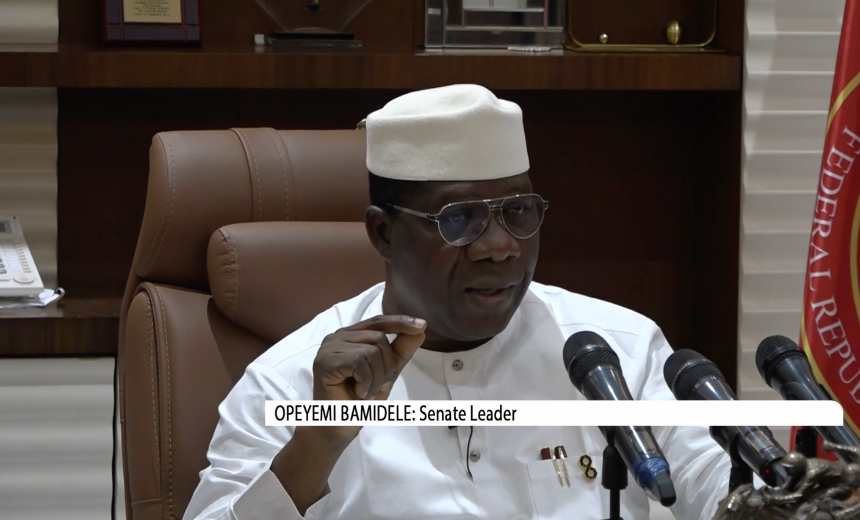
Senate Leader, Opeyemi Bamidele, has proposed a constitutional amendment to introduce a single six-year tenure for Nigeria’s President and state governors, arguing that the current two-term structure often distracts elected leaders from governance.
Speaking while reflecting on legislative reforms and the future of Nigeria’s democracy, Bamidele said one of the bills he hopes to sponsor in the 11th Senate would seek to limit presidents and governors to a single six-year term in office.
According to him, the proposal would enable elected leaders to focus fully on governance rather than spending a significant portion of their first term preparing and campaigning for re-election.
Bamidele argued that under the current arrangement, many office holders begin thinking about their second-term ambitions shortly after assuming office, a development he believes affects policy implementation and long-term planning.
The idea of a single tenure for elected executives is not new in Nigeria. Over the years, constitutional amendment proposals have sought to replace the current two four-year terms with a single five or six-year term.
Supporters argue that presidents and governors often spend the first year settling into office, while attention gradually shifts to political consultations and re-election calculations.
Advocates of the reform contend that the pressure of securing a second term can distract office holders from governance, encourage excessive political maneuvering and sometimes lead to the use of state resources for electoral purposes.
They argue that a single six-year term would allow leaders to focus entirely on delivering policies and projects without the burden of seeking another mandate.
Supporters also believe the arrangement could reduce the cost of elections, lessen political tension associated with re-election campaigns and provide greater stability for long-term development programmes.
However, critics argue that removing the possibility of re-election could weaken democratic accountability by denying voters the opportunity to reward performing leaders or remove underperforming ones through the ballot.
The Senate Leader stressed that the proposal represents his personal opinion and does not necessarily reflect the position of the National Assembly.
He noted that the essence of parliament is to continuously review and amend laws to reflect changing realities and strengthen democratic governance.
Any amendment introducing a single six-year tenure for presidents and governors would require significant constitutional changes, including approval by the National Assembly and at least two-thirds of the State Houses of Assembly before it can become law.
Whether sitting presidents would agree to assent to such a sweeping constitutional amendment, if it eventually scales through the legislative process, also remains to be seen.
(Editor: Terverr Tyav)