
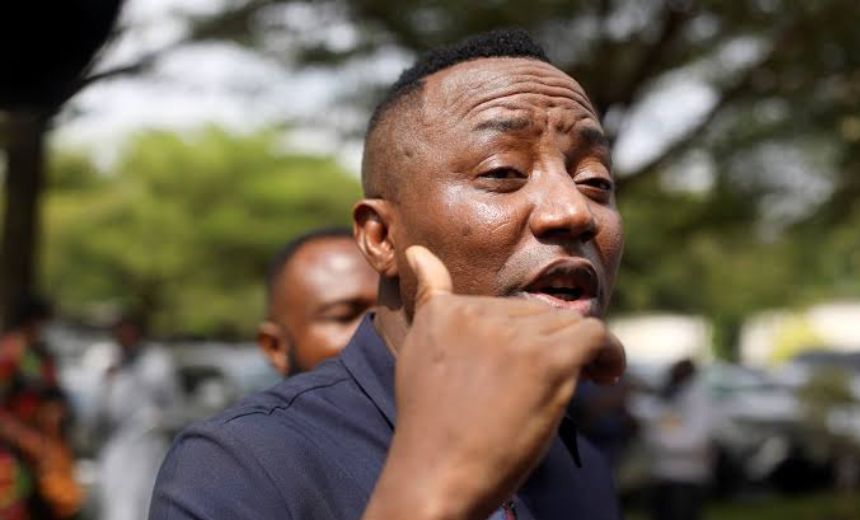
The trial of activist and African Action Congress (AAC) presidential candidate, Omoyele Sowore, took a dramatic twist on Monday as the prosecution urged the court to remand him in custody over his failure to fully meet the conditions attached to his bail.
The Department of State Services (DSS) is prosecuting activist Omoyele Sowore over allegations of cyberstalking and criminal defamation following social media posts in which he called President Bola Tinubu a “criminal”.
During proceedings before a Federal High Court in Abuja, counsel for the State Security Services, Akinlolu Kehinde (SAN), informed the court that Sowore had yet to perfect the bail conditions earlier granted by Justice Mohammed Umar.
Kehinde argued that compliance with court orders is mandatory and urged the court to commit the defendant to the Kuje Custodial Centre until all bail requirements are satisfied.
According to him, Sowore had neither fulfilled the conditions nor sought a variation of the bail terms.
He further told the court that although Sowore had initially been released to his legal team to enable him deposit his international passport and complete other conditions, the prosecution had not been notified of any difficulty in complying with the order.
Responding, defence counsel Olumide Fusika opposed the application, insisting that bail is intended to secure an accused person’s attendance in court and not to serve as punishment.
He maintained that substantial progress had been made in verifying the bail documents already submitted.
He assured the court that the passport would be deposited before the close of business on July 13 and requested that his client remain in his custody until then.
Justice Umar however, allowed him to remain with his counsel pending completion of the bail process.
Meanwhile, the defendant formally opened his defence by calling Abuja-based lawyer Deji Adeyanju as his first witness.
While giving evidence, Adeyanju told the court that President Bola Ahmed Tinubu had, during an official engagement in Benue State, publicly stated that Nigerians are free to criticise, insult, or call him names without intimidation, describing such expressions as part of democratic freedoms.
He also testified that the President urged law enforcement agencies and the judiciary to protect citizens’ rights rather than suppress dissent.
Video recordings containing the President’s alleged remarks were tendered by the defence on a flash drive and admitted by the court as exhibits.
The matter was then adjourned to 13th July for continuation of the defence.
(Editor: Anoyoyo Ogiagboviogie)