

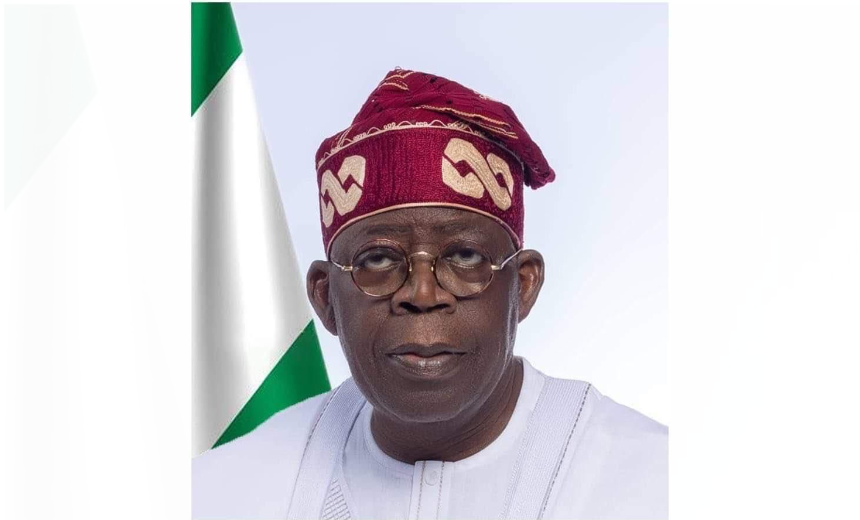
Three years into the President Bola Tinubu administration, Nigeria’s agricultural sector presents a mixed bag of results.
While the period has been defined by ambitious, policy-driven mechanisation and massive funding, the sector remains heavily constrained by poor implementation, severe food inflation, insecurity, and supply chain shocks.
President Bola Tinubu began the talk of food production during his campaigns for election, pledging to enhance agriculture to guarantee food security.
On assumption of office, he initiated series of policies under his Renewed Hope Agenda, aimed at structural interventions that will modernise Nigeria’s food systems.
Among initiatives introduced
was a big focus on:
- rapid mechanization
- dry-season farming expansion, and
- direct fiscal incentives to combat food insecurity. AGRICULTURE GROWTH Real Annual GDP Growth – 2.92%
Total Turn Over – N101.46 trillion)* IMF 2026 Forecast – 4.49% Projected Expansion
Driven by an improved investment environment and import waivers, Nigeria’s agricultural sector recorded a real annual growth rate of 2.92%, pushing total sector turnover to ₦101.46 trillion.
This marked a notable expansion compared to the 1.69% growth rate seen previously.
The administration also doubled down on its AGRIC expansion programme, which was a dominant agenda of the President’a visit to Brazil in mid 2025
Central to this was the Renewed Hope Agricultural Mechanisation Programme, where the administration injected large-scale capital assets into local farming networks, notably rolling out 2,000 tractors supplied by Belarus to boost commercialized output.
FOREIGN CAPITAL INFLOWS
Capital Importation: $167.5 million
The result? Data from the National Bureau of Statistics (NBS) reveals that the agricultural sector attracted $167.25 million in capital importation, signaling an erratic but upward trajectory in foreign investor interest.
But while there have been measurable macro-level growth, the costs of food, transportation, and agricultural inputs have skyrocketed, deepening the hunger crisis across the country.
Back in the villages and communities, rural farmers needed more support leading the President’s declaration of a state of emergency on food insecurity.
But one year after that emergency declaration, the reality on the ground remained uninspiring. Prices continued to soar, purchasing power collapsed, and inflation hit historic highs.
The mounting hardship ultimately drove thousands of citizens to the streets in 2024 for nationwide hunger protests.
Acknowledging that Nigerian farming can no longer rely solely on rainfall, the administration launched an ambitious Dry Season Farming Initiative targeting 500,000 hectares of land.
In a bid to provide immediate relief, President Tinubu ordered the release of 42,000 metric tonnes of assorted grains and 60,000 tonnes of rice from the National Strategic Grain Reserves.
These supplies were distributed across the 36 states and the FCT to stabilize markets and support vulnerable households.
Then came a controversial regulatory push. On September 11, 2025, the federal government ordered a special Federal Executive Council committee to aggressively crash food prices nationwide. It was a move that drew sharp criticism from agricultural experts.
They warned that forcing food prices down while the cost of synthetic production inputs was rising was unsustainable—describing it as “cheap food today, deeper hunger tomorrow.”
Fertilizer remains the single largest cost driver in crop production, and its soaring price tag has priced out millions of smallholder farmers. Without direct intervention, crop yields risk an outright collapse.
To balance farmer income with national productivity, the government expanded its fertilizer support systems and scaled up its climate-smart agricultural initiatives.
The focus is shifting toward solar-powered irrigation, all-year-round production, and agro-industrial value addition.
High-yield seed varieties for rice, hybrid maize, millet, cocoa, and oil palm are also being distributed across the country to double per-hectare productivity.
While these interventions are still very much a work in progress, proponents argue that they have stabilized market supplies in recent months, signaling the start of a new green revolution.
Yet for the average Nigerian, expectations remain high for more sustainable interventions that will bring food prices down to a manageable level .
(Editor: Anoyoyo Ogiagboviogie)