
The ability of the Nigeria Police Force, NPF, to effectively combat crime, address rising insecurity, and improve officers welfare received a boost as the Senate passed for second reading a bill seeking to increase funding for the security agency from 0.5% to 1% of total government revenue.
The executive bill introduces diversified funding sources for the Police, including development levies under relevant tax laws, federal, state and local government allocations, grants and international interventions, as well as private sector contributions and endowments.
The aim, according to the proposal, is to reduce over-reliance on annual budgetary provisions and strengthen sustainable financing for police operations.
It further outlines priority areas for deployment of funds, including procurement of modern security equipment, deployment of digital surveillance and forensic technology, construction and rehabilitation of police facilities, training and capacity building, improved intelligence operations, emergency response capabilities, and enhanced welfare packages for personnel.
However, the bill, which enjoyed broad support from lawmakers, generated constitutional concerns as Senator Adamu Aliero raised objections to the proposed 1% deduction from national revenue.
He argued that the Federation Account is shared strictly among the three tiers of government, including the Federal, State, and Local Governments in line with the revenue allocation formula.
Aliero maintained that no agency is permitted to benefit directly from deductions from the Federation Account or the Consolidated Revenue Fund, warning that such provisions may run contrary to constitutional guidelines.
He also cited past instances where similar deductions were challenged by Governors, noting that legal disputes were eventually withdrawn following consultations
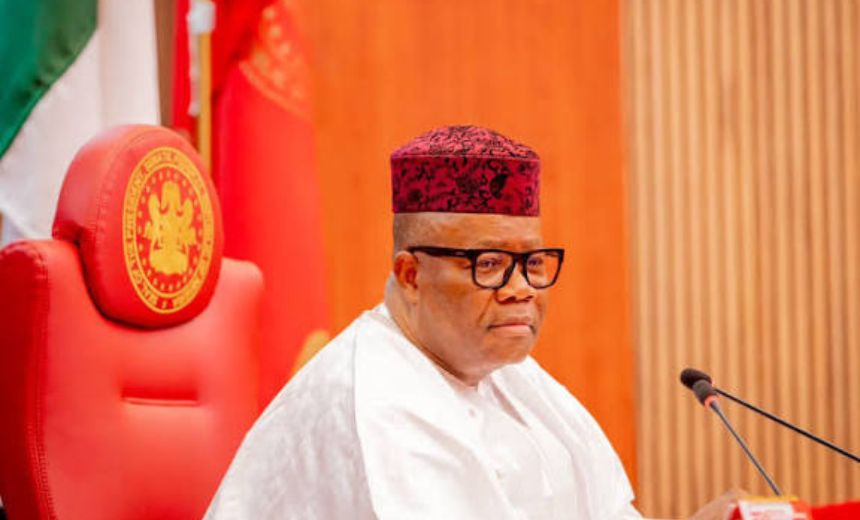
Responding, President of the Senate, Godswill Akpabio called for thorough scrutiny of the proposal, stressing the need to assess the performance of existing funding structures.
MUST READ:Senate Approves Bill to Extend Nigeria Police Trust Fund from 6 to 12 Years
He urged lawmakers to rely on data-backed justification for the proposed increase and questioned whether current contributions and grants had been effectively utilised.
Akpabio also referenced his experience as a former Governor, noting that he often had to directly procure equipment for the Police due to funding gaps, and recalled that in some years, state governments received little or no funding support from the centre.
The bill also seeks to repeal the Nigeria Police Trust Fund Act, 2019 (as amended), and establish a new legal framework under the Nigeria Police Trust Fund, 2026.
Leading the debate, Senate Leader, Opeyemi Bamidele said the initiative is necessary in response to rising security challenges, including insurgency, banditry, kidnapping, armed robbery, cybercrime, and communal unrest.
He said these threats have overstretched the Nigeria Police Force, which continues to face severe constraints in funding, equipment, infrastructure, training, and welfare.
Bamidele explained that the bill is designed to address long-standing structural weaknesses through a more sustainable funding and implementation framework, including the creation of a Project Implementation Committee to monitor execution, ensure compliance with standards, evaluate outcomes, and report progress to supervising authorities.
Lawmakers, however, maintained that the bill represents more than a funding mechanism, describing it as a strategic national security reform aimed at strengthening internal security, improving law enforcement capacity, restoring public trust in the police, supporting economic stability, and complementing broader national security efforts.
Despite constitutional concerns raised during debate, the bill passed second reading and has been referred to the Committee on Police Affairs.
The committee is expected to organise a public hearing and ensure that all concerns capable of affecting the legislation are addressed.
(Editor: Terverr Tyav)