

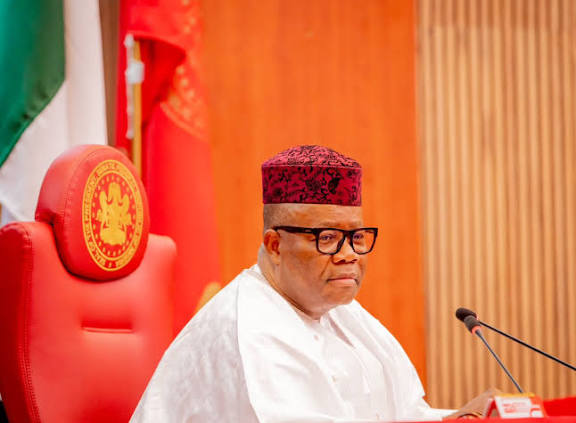
President of the Senate, Godswill Akpabio, has expressed concern over reports alleging that some local government chairmen are negotiating with bandits in parts of the country, describing such claims as deeply troubling if they are proven to be true.
Reacting to the persistent banditry that has plagued Nigeria for nearly two decades, Akpabio said he had come across videos circulating on social media which appear to show armed bandits openly engaging with local government officials.
According to him, the footage allegedly shows bandits arriving with their weapons, holding discussions in a relaxed atmosphere and thereafter firing shots into the air as they leave.
He further noted that the same armed individuals were seen moving freely into markets to buy goods and interact with civilians without hindrance.
While stressing that he hopes the videos are not from Nigeria, Akpabio said there is growing suspicion that such activities may be taking place in parts of the North, from Katsina and beyond.
He warned that if confirmed, the alleged collaboration would further complicate efforts to bring banditry to an end in the country.
The Senate President explained that tackling banditry goes beyond confronting armed groups alone, noting that collaborators must also be identified and addressed.
He cautioned that without dealing with internal collaborators, security operations could be compromised, as bandits may be tipped off ahead of military action.
Describing banditry as a multifaceted security challenge, Akpabio said there is a need for constant review and adjustment of strategies as the situation evolves.
He emphasized that the National Assembly has a responsibility to ensure that the military is adequately funded, not just through approvals, but through the actual release of funds.
Akpabio assured that lawmakers would follow up with the Presidency to ensure that security funding approvals translate into timely releases, adding that once this is achieved, the responsibility would rest squarely on the service chiefs to carry out their duties.
(Editor: Anoyoyo Ogiagboviogie)