
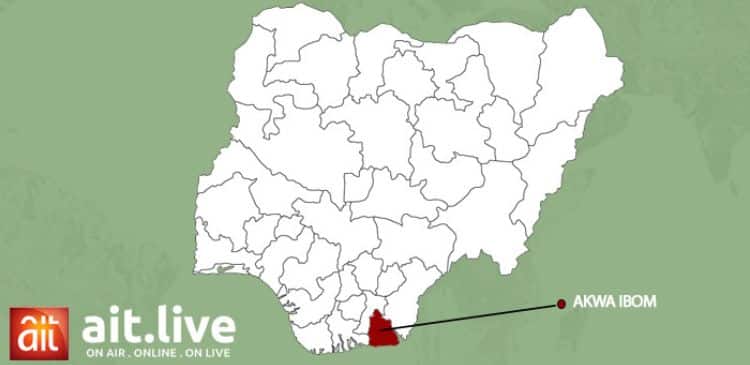
Akwa Ibom State has emerged as the cleanest state in Nigeria for year 2025, with a cumulative score of 79%.
Enugu and Ebonyi States followed closely, ranking second and third place with 65% and 56% respectively.
This is the result from the State of the Nigerian Environment Report (STONE 2025 UNBROKEN) and the Cleanliness Performance Index Ratings of all states in Nigeria disclosed by the National Coordinator of Clean-Up Nigeria, Ene Owoh during the public presentation of the report in Abuja.
The annual study was carried out by the National Technical Study Group (NTSG) from November 2024 to November, 2025.
The 15-member NTSG, led by Professor Solomon Balogun combined physical verification of all states and towns in Nigeria with a score point of 20%, and satellite imagery system that collects spectral data scoring 80% monthly.
The study used five variables namely :street/road cleanliness, vegetation and drainage control, waste management services, public opinion poll (POP), and knowledge, attitude, and practice (KAP) of hygiene and sanitation measures by the people.
The report notes that in 2025, there was an 8% performance in the procurement of waste management equipment by governments at all levels.
However, the health of sanitation workers dropped from 31% in 2024 to 28% in 2025. The incidence of sanitation-related diseases increased to 43% in 2025, against 29% recorded in 2024.
The hygiene and sanitation practice of the people dropped to 32% in 2025, against 36% recorded in 2024.
Open defecation has reduced from 24% in 2024 to 19% in 2025, but Nigeria remains the second country with the highest open defecation rating globally.
The nine clean states are ; Akwa Ibom, Enugu, Ebonyi, Bauchi, Plateau, Cross River, Anambra, Lagos, and FCT.
Notably, in 2025, out of Nigeria’s estimated 240 million population, 187.2 million people are living in unclean environments, based on satellite imagery data.
MUST READ: Akwa Ibom Governor Empowers Hundreds Of Farmers And Traders In Eket
The STONE report , stated that the life expectancy of ordinary Nigerians has dropped from 50 years in 2024 to 47 years in 2025. Prince Owoh therefore called on governments at all levels to increase funding for waste management services and urged citizens to prioritize hygiene and sanitation practices.
He also advocated for increased construction of public toilets to reduce open defecation and supported the establishment of health and environment clubs in schools nationwide to promote environmental awareness.
(Editor: Anoyoyo Ogiagboviogie)