


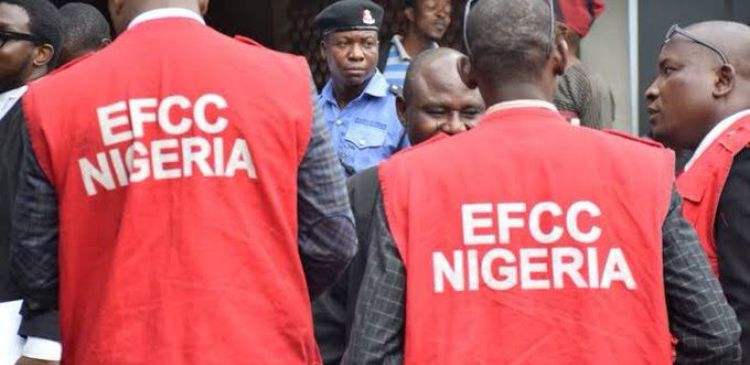
The Economic and Financial Crimes Commission, EFCC, says delays in the judicial process and the time required to gather credible evidence remain major challenges in prosecuting economic and financial crimes in Nigeria.
The Commission made the disclosure in Kaduna during a sensitisation and capacity-building workshop for civil society organisations and journalists, aimed at strengthening collaboration and improving conviction rates.
The one-day workshop, organised by the EFCC, Kaduna Zonal Directorate, focused on equipping journalists and civil society organisations with deeper understanding of emerging financial crime trends, including cryptocurrency fraud and other digital-driven threats.
It also served as a platform to strengthen strategic partnerships, enhance public awareness, and improve collective action against economic and financial crimes.
Delivering the message of EFCC Chairman, Ola Olukoyede, the Acting Zonal Director, Bawa Kaltungo, described the media and civil society as critical partners in promoting transparency, exposing corruption, and driving public accountability.
Kaltungo stressed that intelligence and information from journalists and civil society groups have supported many of the Commission’s major investigations, noting that the EFCC does not see them as mere observers, but as partners in progress.
Technical sessions at the workshop examined the challenges facing the prosecution of financial crimes and outlined reforms needed to strengthen conviction rates and speed up the justice process.
The EFCC reaffirmed that sustained collaboration with the media and civil society remains key to deepening grassroots engagement and building stronger alliances in Nigeria’s anti-corruption campaign.
(Editor: Nkoli Omhoudu)