
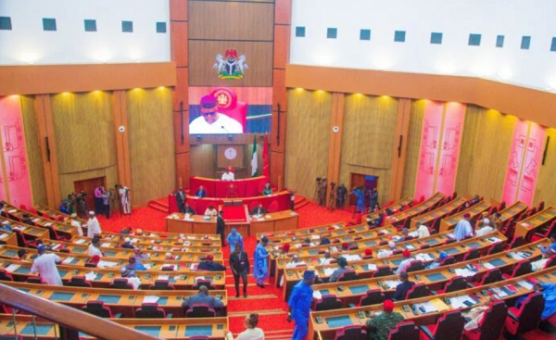
The Nigeria Senate has passed for second reading a bill seeking to strengthen Nigeria’s legal framework against counterfeit medicines, fake drugs, and unwholesome processed foods by introducing tougher penalties, enhanced enforcement powers, and stricter measures to curb the menace.
A major provision of the bill is the prohibition of drug hawking and the sale of medicines in open markets, motor parks, roadside stalls, buses, ferries, unlicensed premises, and illegal online platforms—channels widely believed to facilitate the circulation of counterfeit medicines.
The bill proposes prison terms of up to 15 years for serious offences, alongside heavy fines and mandatory compensation for victims or their families where counterfeit drugs result in death or grievous bodily harm.
It criminalises every stage of the counterfeit supply chain, including the manufacture, importation, exportation, transportation, warehousing, distribution, sale, and possession of fake drugs, as well as the production or possession of labels, wrappers, packaging materials, and equipment intended for counterfeiting.
The proposed legislation, titled the Counterfeit Medical Products, Fake Drugs and Unwholesome Processed Foods (Prohibition and Control) Bill, 2026 (SB.951), is sponsored by Senator Sadiq Suleiman (APC, Kwara North).
The legislation also holds corporate organisations accountable, making directors and company officials personally liable where they connive in the commission of offences.
It further empowers courts to seal offending premises and bar convicted persons from engaging in pharmaceutical-related businesses.
To strengthen enforcement, the bill provides for the establishment of national and state task forces comprising the National Agency for Food and Drug Administration and Control (NAFDAC), the Nigeria Police Force, the Nigeria Customs Service, the Nigeria Immigration Service, the Pharmacists Council of Nigeria, and other relevant agencies to facilitate intelligence sharing, coordinated enforcement, and nationwide surveillance.
It also authorises the seizure, freezing, and forfeiture of assets linked to counterfeit drug syndicates, the destruction of fake products, the recovery of assets through international cooperation, and the creation of an Asset Recovery Fund to support enforcement operations.
In addition, the bill vests exclusive jurisdiction over offences under the proposed law in the Federal High Court, mandates the accelerated hearing of cases, recognises electronic evidence, and empowers NAFDAC legal officers to prosecute offenders in a bid to minimise delays in criminal trials.
Leading the debate, Senator Suleiman said the bill seeks to repeal the obsolete Counterfeit and Fake Drugs and Unwholesome Processed Foods Act, replacing it with a modern legal framework capable of addressing emerging threats posed by counterfeit medicines, adulterated cosmetics, mislabelled chemicals, and unsafe processed foods.
He noted that advances in technology, online marketing, cross-border trafficking, and organised criminal networks had rendered the existing law inadequate to effectively tackle the growing menace.
According to him, the legislation is aimed at protecting Nigerians from preventable deaths and disabilities caused by fake medicines, restoring confidence in the nation’s healthcare system and pharmaceutical industry, safeguarding legitimate businesses, and aligning Nigeria’s anti-counterfeit regime with global best practices.
The bill received support from lawmakers during the debate.
Senator Samson Ekong described the proposal as timely and long overdue, lamenting that counterfeit medicines had become so widespread that the principal beneficiaries were casket makers because of avoidable deaths.
He said the Senate had a responsibility to ensure that those involved in the illicit trade face severe punishment capable of deterring others.
Senator Adams Oshiomhole said virtually every Nigerian had either been a victim or was at risk of becoming one, describing fake medicines as instruments of death.
Deputy Senate President Barau Jibrin supported the bill but urged the committee to clearly establish that the proposed legislation would strengthen, rather than duplicate, the powers of NAFDAC.
The bill was referred to the Senate Committee on Health (Secondary and Tertiary) to report back within four weeks.
(Editor: Ada Ononye)