

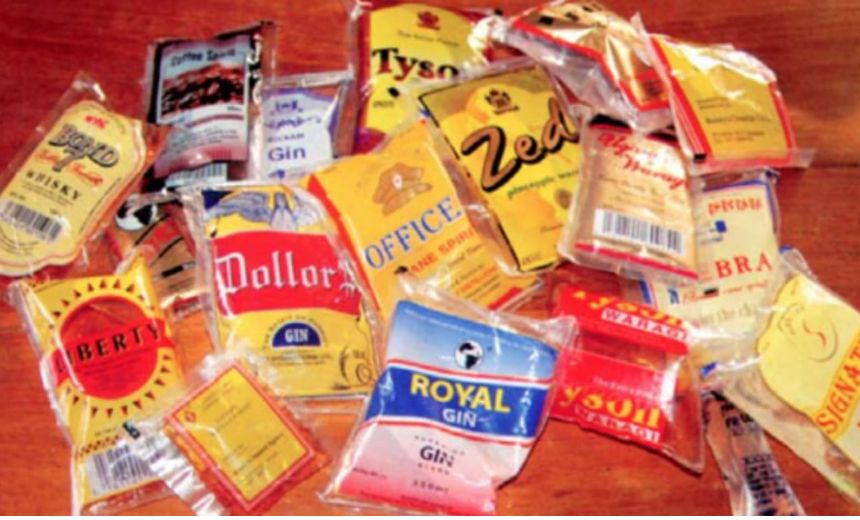
National Agency for Food and Drug Administration and Control, NAFDAC, and the National Orientation Agency, NOA, have launched a nationwide campaign to ban the production and sale of alcohol in sachets and small PET bottles.
This move is aimed at reducing underage access to cheap, high-concentration alcohol and curbing the alarming pattern of harmful consumption across the country.
According to a 2021 survey conducted by NAFDAC and the Distillers and Blenders Association of Nigeria, 54.3% of minors and underaged persons obtain alcohol by themselves, with 49.9% patronising retailers selling drinks in sachet packs and PET bottles.
The survey also revealed that 63.2% of minors and 54% of underaged persons drink alcohol occasionally, while 2.5% of minors and 11.7% of underaged children engage in binge drinking.
NAFDAC Director-General, Professor Mojisola Adeyeye, stated that the ban is a deliberate public health intervention aimed at protecting Nigerian consumers, particularly children and young adults, from the harmful effects of alcohol.
Adeyeye emphasised that access to alcohol by children can be limited if pack sizes that can be easily concealed are not available.
MUST READ:NAFDAC Frowns At Soaring Underage Alcohol Consumption
NOA Director-General, Lanre Issa-Onilu, emphasised that the campaign is not about restriction, but about protection. Onilu urged parents, community leaders, and retailers to support the ban and promote responsible consumption
The NOA CLHEEAN App will also be deployed to empower citizens to report violations and support responsible enforcement.
The Federal Government banned the production and sale of alcohol in sachets and glass bottles below 200 millilitres, with effect from January 1, 2026.
This decision is in line with the World Health Organization’s Global Strategy to Reduce the Harmful Use of Alcohol.
The NOA, in partnership with NAFDAC and the Federal Competition and Consumer Protection Commission, FCCPC says it will continue to sensitise the public, and work with community leaders, retailers, and distributors to ensure compliance with the ban.
The campaign is a move that is expected to have far-reaching benefits for the country’s social and economic development.
(Editor: Terverr Tyav)