
Nigerian Government has inaugurated a multi‑agency technical committee to review the $200 billion Integrated Gas, Power and High‑Speed Rail Project, saying the mega‑deal must be thoroughly vetted to safeguard national interests, ensure financing credibility and protect Nigeria from unseen liabilities.
The project, Nigeria’s flagship infrastructure initiative under President Bola Tinubu’s “Renewed Hope Agenda,” announced on August 2025, is intended to simultaneously upgrade energy supply, industrialise the gas sector, and transform national transport connectivity.
The project aims to break the cycle of poor power supply by directly linking Nigeria’s large gas reserves to power generation and rail electrification.
It is also to de‑congest road networks and reduce transport costs by shifting long‑haul freight and passenger traffic to high‑speed rail, with commercial speeds projected around 200–250 km/h.
The project also aims to position Nigeria as a regional logistics and manufacturing hub by clustering industries along the rail‑gas‑power corridors.
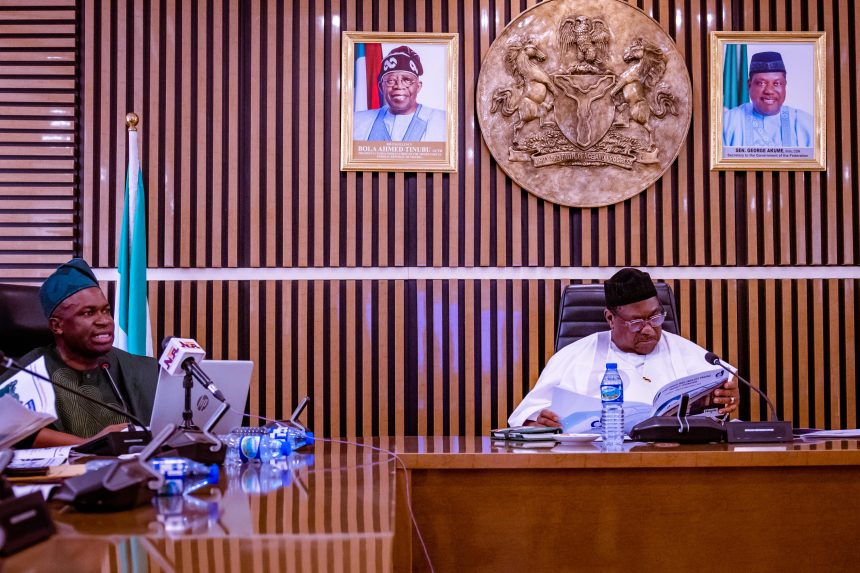
Speaking at the event, Secretary to the Government of the Federation, SGF, George Akume, stressed that the proposal, put forward by the De‑Sadel (Nigeria) Limited consortium in partnership with China Liancai Petroleum Investment Holdings Limited (Liancai Group), is “too large and too important” to be rushed.
Akume said the project, estimated at about $200 billion is envisioned as a multi‑phase programme integrating gas development, power generation and transmission, and the construction of a 4,000‑kilometre high‑speed rail network linking major economic corridors such as Lagos, Abuja, Kaduna, Kano and Port Harcourt.
Akume disclosed that the Office of the Secretary to the Government of the Federation had received inputs from security, financial intelligence and regulatory agencies, especially on the consortium’s financial support arrangements and the profile of the participating entities, hence the need for a coordinated technical review.
The inter‑agency Technical Committee is chaired by the Permanent Secretary of the Political & Economic Affairs Office, OSGF, and includes representation from the Federal Ministries of Transportation, Petroleum Resources, Finance, Justice, and Environment; the Central Bank of Nigeria CBN, Nigeria Financial Intelligence Unit NFIU, Economic and Financial Crimes Commission EFCC, National Intelligence Agency NIA, Office of the National Security Adviser ONSA,, Debt Management Office DMO, and others.
(Editor: Terverr Tyav)