
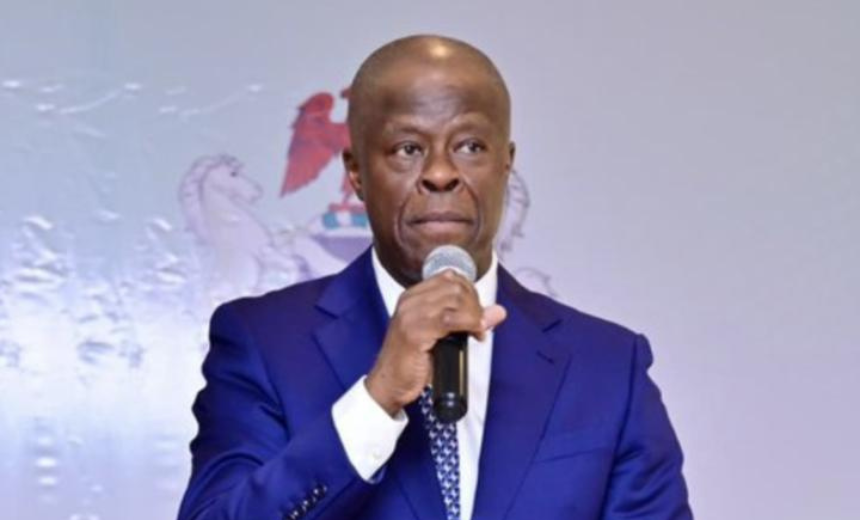
The Minister of Finance and Coordinating Minister of the Economy, Wale Edun has reaffirmed the Federal Government’s commitment to stabilising and repositioning Nigeria’s economy for sustainable growth.
Edun while Addressing journalists at a media briefing, outlined progress made under ongoing macroeconomic reforms and projected stronger growth in the months ahead.
In his words“We are now focused on scaling up growth. Growth comes from investment, and investment comes from stability.”
The Minister says Nigeria is navigating a challenging global economic landscape marked by uncertainty, high interest rates, and reduced multilateral cooperation. He notes that developing countries are currently experiencing negative financial flows, with debt servicing outweighing foreign direct investment and overseas development assistance.
The Minister explains that Nigeria’s response has been to deepen domestic revenue mobilisation, attract investments, and diversify the economy away from oil dependence.
According to him, Nigeria’s economy is showing resilience. Gross Domestic Product growth rose from 3.1 percent in the first quarter of 2025 to 4.23 percent in the second quarter, with the third quarter at 3.98 percent. The fourth quarter is projected to close between 4.2 and 4.5 percent.
Edun reveals that oil and gas contribution to GDP has declined to just under four percent, down from 5.65 percent in 2019, while oil exports now account for 65 percent of total exports, compared to 87 percent in 2019.
MUST READ: Demolished Property Owners Recieve Compensation
The Minister credits monetary tightening policies by the Central Bank for stabilising inflation, strengthening foreign reserves, and restoring investor confidence nothing that the reforms were difficult but necessary.as they provided a platform for sustained growth.
He adds that the Federal Government is targeting seven percent annual GDP growth, which he says would significantly outpace population growth and lift millions out of poverty.
On fiscal reforms, the Minister highlights a recent executive order directing certain oil sector revenues, including management and gas flare penalty fees to be remitted directly into the Federation Account.
He describes the move as a boost for fiscal federalism and stronger public finances.
He said the 2026 Appropriation Bill, currently before the National Assembly, is designed to support investment-led growth, maintain fiscal discipline, and ensure value for money.
Meanwhile, Nigeria continues to push economic diplomacy globally, engaging investors in Tokyo, Abu Dhabi, and at the G-24 meetings, where the country currently chairs the group of developing economies.
On recent improvements in the oil and gas sector, the Minister says, it has already triggered a multi-billion dollar investment announcements, with expectations of more across infrastructure, telecoms, and public-private partnerships.
The Minister emphasised that in an era of global economic competition, Nigeria must rely on domestic resources, expand regional trade, and sustain reforms to secure long-term prosperity.
(Editor: Roluke Ogundele)