

The proposal to abolish the policy separating Junior Secondary Schools, JSS from Senior Secondary Schools, SSS in Nigeria would be presented at the next meeting of the National Council on Education for formal consideration.
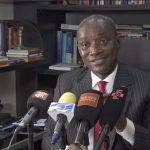
Minister of Education, Dr. Tunji Alausa who made this known at the inauguration of the Universal Basic Education Commission, UBEC Ministerial Implementation and Monitoring Committee in Abuja on Tuesday, said the arrangement separating JSS from SSS has failed and contributed to the alarming number of out-of-school children.
He noted that findings by the government showed that while Nigeria has about 80,000 public primary schools, there are only about 15,000 junior secondary schools, creating a huge transition gap that has left millions of children stranded after completing primary education.
According to the minister, the policy requiring JSS and SSS to operate as separate institutions has worsened access to education by overcrowding junior secondary schools while leaving many senior secondary schools underutilised.
Further breakdown shows that about 24 million children enrol in the country’s primary schools, but only about 4 million of them complete senior secondary, forcing over 20 million children to drop out between primary school and junior secondary school.
The Minister cited evidence from Kaduna and several northern states showing that the disarticulation policy of 6:3:3:4, created unnecessary administrative structures at the expense of students.
In more than 40 years, Nigeria has operated an education system, generally referred to as the 6-3-3-4 system, which consists of 6 years of primary education, 3 years of junior secondary, 3 years of senior secondary, and a minimum of 4 years of tertiary education.
That system, Dr. Alausa says is now broken down into three major tiers: Basic Education, Post-Basic or Senior Secondary, and Tertiary Education.
While admitting that governments have not done enough in resolving the country’s learning crisis, the Minister blamed successive governments for the failure to adequately address the problem.
While inaugurating a high-powered committee chaired by renowned education expert, Professor Rashid Aderinoye, to fast-track the completion, handover and operationalisation of hundreds of Smart Schools, Bilingual Schools and Alternative Schools funded by UBEC across the country, the minister lamented that despite huge public investments, many of the schools remained abandoned, while several completed projects had yet to be handed over to state governments or opened for academic activities.
For the UBEC Executive Secretary, Aisha Garba, the Federal Government had recorded significant progress in expanding access to quality basic education through the Smart Schools, Bilingual Schools and Alternative Schools programmes.
She disclosed that 37 Smart Schools had been established nationwide, with 24 already in operation, while the remaining schools were at various stages of completion, furnishing and readiness for academic activities.
(Editor: Terverr Tyav)