

Governor Siminalayi Fubara has presented the 2026 Appropriation Bill to the Rivers State House of Assembly, proposing a budget of over one-point-eight-five trillion naira to expand infrastructure and improve the welfare of residents.
The budget, christened the “Budget of Resilience for Growth and Development,” comes seven months into the fiscal year after months of political uncertainty delayed its presentation.
Despite the late submission, the governor expressed confidence that the budget would be effectively implemented once approved by the legislature.
The presentation, which comes nearly seven months into the 2026 fiscal year, follows a prolonged political crisis that strained relations between the executive and the legislature and delayed the state’s budget process.
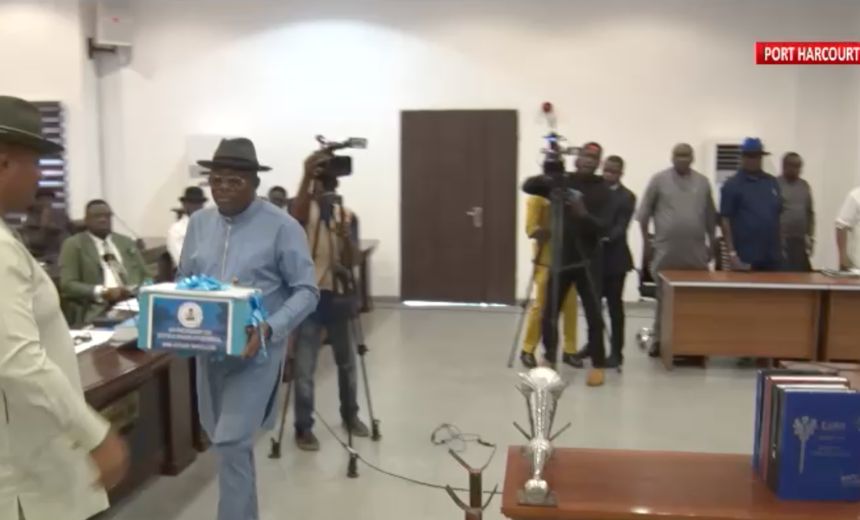
The governor announced that the 2026 budget, titled “Budget of Resilience for Growth and Development”, is the result of considerable public participation in a shared vision for building an economically resilient, thriving, and prosperous Rivers State.
Over 413 billion naira has been earmarked for recurrent expenditure, while the larger share of the budget, amounting to over 1.4 trillion naira, is devoted to capital expenditure, reflecting the administration’s emphasis on infrastructure development and economic expansion.
MUST READ: Chioma Ezedimbu and Others Shine at 2026 TeenEagle Global Finals in the United Kingdom
The Works and Infrastructure sector received the highest allocation of more than 533 billion naira, followed by Education with 315 billion naira, and Healthcare Delivery with over 105 billion naira.
Governor Fubara stressed that beyond allocating funds, the budget seeks to create jobs, attract investment, improve public service delivery, and ensure that every community benefits from government projects.
As lawmakers begin deliberations on the appropriation bill, expectations remain high that both the executive and legislative arms will sustain their renewed cooperation to ensure that Rivers State recovers lost time and delivers tangible dividends of governance despite the compressed implementation period.
(Editor: Ebuwa Omo-Osagie)