
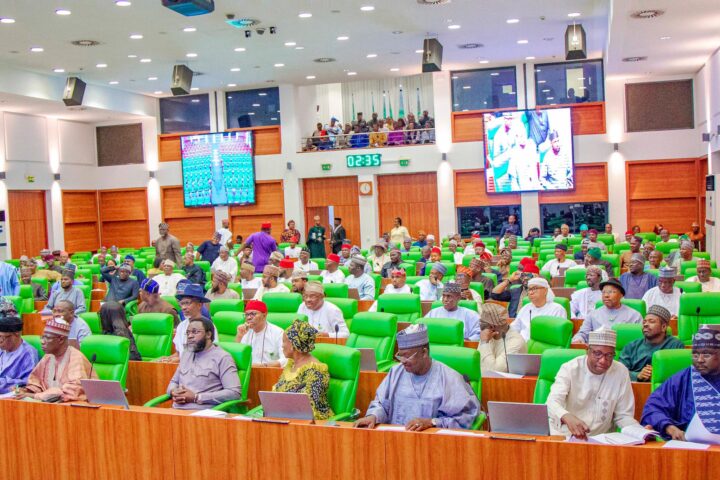
Nigeria’s House of Representatives Committee on Sports has raised the 2026 budget proposal of the National Institute of Sports (NIS) from ₦2.8 billion to about ₦60 billion.
Chairman of the Committee, Kabiru Ahmadu, disclosed this during the institute’s budget defence session. He explained that the upward review followed consultations between the committee, the institute’s management, and the leadership of the Budget Office of the Federation.
Ahmadu commended the Director-General of the Institute, Philip Shaibu, for introducing reforms aimed at repositioning the agency. He noted that adequate funding is essential to implement the outlined programmes and reverse years of neglect.
The chairman described the institute as a critical pillar of national sports development, stressing that improved funding would enable it to effectively carry out its mandate. He also assured that the committee would continue to engage relevant stakeholders to ensure sustained financial support.
Earlier, the Director-General and former Deputy Governor of Edo State appealed for increased funding while presenting the 2026 budget proposal. He revealed that the institute’s 2025 capital allocation was not released.
Shaibu lamented that 52 years after its establishment, the institute lacks a defined action plan. He said his administration has developed a 10-year master plan to reposition the NIS and restore its relevance.
MUST READ:NFF, NIS Back Niger Delta Sports Festival, Urge Others To Emulate Region
He attributed the recent underperformance of Nigerian athletes to inadequate funding, adding that efforts are underway to revamp the Athletes Development Centre, which he described as being in poor condition when he assumed office.
Reaffirming the institute’s commitment to training sports professionals and promoting grassroots development, Shaibu thanked President Bola Tinubu and the House Committee on Sports for their support.
He also called for the prompt constitution of the board of the National Sports Commission, noting that a properly constituted board would provide the strategic direction and institutional stability required for sustainable sports development.
Describing the NIS as the backbone of Nigeria’s sports ecosystem, Shaibu urged greater national attention to enable the country achieve improved performances in both local and international competitions, attributing its limited presence across states to prolonged underfunding.
(Editor: Ada Ononye)