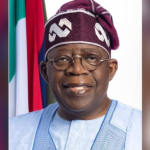

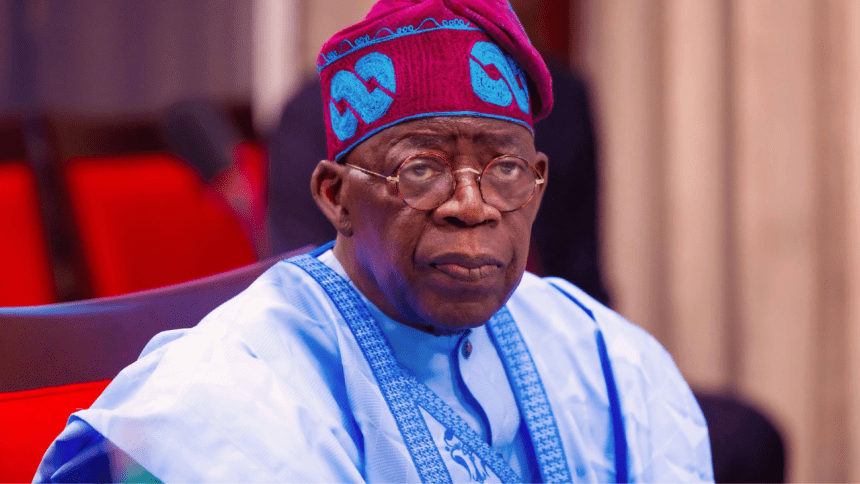
President Bola Tinubu is back in Abuja after a state visit to China, where he also attended the China- Africa Summit, and had a brief stay in the United Kingdom.
He is making what has been tagged the necessary diplomatic shuttles across the world to boost Nigeria’s image and get juicy deals to the advantage of the country.
On September 2 last year, just over three months after being sworn in as Nigeria’s new leader, he recalled all ninety five ambassadors from the country’s various missions.
Foreign Affairs minister, Yusuf Tuggar, who issued the statement and had assumed office 11 days earlier told staff at his resumption of duty at the Tafawa Balewa House, the headquarters of Nigeria’s foreign service, of the new administration’s foreign policy thrust- Democracy, Demography,, Development and Diaspora, dubbed the Four Ds.
Tuggar’s statement said, ” Ambassadors as representatives of the country serve at the behest of the President and it’s his prerogative to send or recall them from any country”.
Erstwhile presidential spokesperson, Ajuri Ngelale, added in a separate statement:
“The President’s directive is sequel to his careful study of the present state of affairs at Nigerian Consulate Offices and Embassies worldwide, and in line with the President’s renewed hope agenda, the President is determined to ensure that world-class efficiency and quality, will henceforth, characterize foreign and domestic service delivery to citizens, residents and prospective visitors alike”.
Ngelale’s statement added that President Tinubu had exempted Prof Muhammed Bande, the then Permanent Representative at the United Nations in New York, and his counterpart in Geneva, to enable a tidier preparation by the Nigerian delegation for 78th General Assembly holding that same month, at which the Nigerian leader gave his first address to a global audience.
79th UNGA
In a couple of days, President Tinubu will be in New York, and It is now over a year since the recall of Nigeria’s top envoys.
“This does not bode well for the country”, says a former Permanent Secretary at the Ministry of Foreign Affairs, Prof Martin Uhomoibhi.
The seasoned diplomat who was a former Permanent Representative at the UN in Geneva said that for Tinubu to be at the General Assembly later this month without a substantive ambassadorial-level official in New York is not a good reflection of the administration’s touted determination to play international politics and diplomacy appropriately.
Seizure of Nigerian Assets
What has occurred in the last couple of weeks has brought to the fore, whether the maxim, “delay is dangerous” has not manifested against Nigeria in various ways with some foreign relations experts saying having ambassadors in place may have, via backroom diplomacy, halted, or at least slowed, the judicial process which led to the temporary seizure of Nigerian assets-
two presidential jets undergoing maintenance, the newest one- a huge Boeing 737 being reconfigured in France, another plane in Canada, as well as two properties in Liverpool in a series of suits filed by a Chinese firm over a botched business deal with the Ogun state government .
The latest addition to the presidential fleet was released, albeit temporarily by that Chinese firm to enable the president undertake, what was tagged a working visit to France.
President Tinubu met his Chinese counterpart Xi jinping two weeks ago in Beijing. Was the issue discussed? Amb. Umohhibhi says even if it was, it will not have been for public knowledge. A point agreed to by an associate professor of international relations and director of research at Nigeria’s foremost foreign policy think tank, the NIIA, Efem Ubi.
One retired career diplomat, who was Nigeria’s ambassador at the African Union, with concurrent accreditation to Ethiopia, told ait.live that the non-appointment of ambassadors till now is “a political and controversial” topic.
“Political”, yes. But why is it “controversial”?.
Funding The Foreign Service
The Tinubu administration has received high marks for substantially increasing the budgetary allocation. From 94 billion naira in the budget he inherited from Buhari, the amount in the 2024 appropriation is 148 billion naira.
But with the continued downward slide of the naira to major international currencies, especially the US dollar, the earmarked sum will definitely turn out to be of lower value for use by the foreign service and its personnel, especially those holding forte at the various missions.
Another challenge, as the president’s top aide on international affairs, Sola Enikanolaiye told ait.live last December on the sidelines of an event put together by retired career ambassadors, is, for whatever amount budgeted amount to be cash-backed and promptly released.
He should know. He was a former permanent secretary at the ministry of foreign affairs.
Tuggar, had at the series of ministerial briefings to mark he first anniversary of the Tinubu administration, also said “funding is our challenge and is hampering the administration’s appointment of ambassadors”.
But the argument by some former diplomats is that the list of ambassadorial nominees can be quickly compiled, so that whenever the senate screening process is completed, deployment can be immediately followed through.
They say, by so doing Tinubu’s foreign policy thrust- the four Ds, can indeed gain momentum.
The Buhari Era
President Tinubu must surely not emulate his predecessor, Muhammadu Buhari, who took a whole 17 months to get ambassadors in place in his first term, and 20 months to get the next set he nominated, screened by the Senate and eventually deployed to the country’s respective missions.
Emulating Yar’dua
Umaru Musa Yar’adua, the second president in this Fourth Republic had his list of ambassadorial nominees ready four months into office.
It is not too late for President Tinubu to strive along these lines and adequately fund the foreign service so that it blossoms once again.
Editor Paul Akhagbemhe