
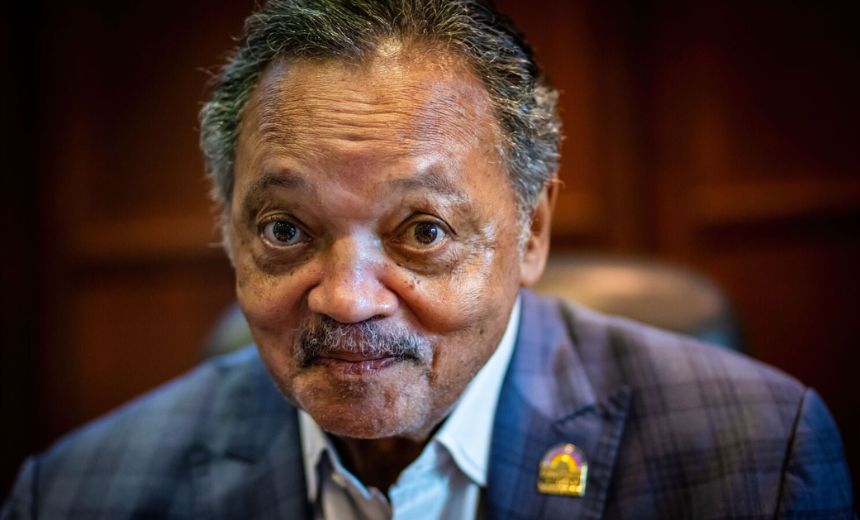
The renowned African-American civil rights activist and politician, Reverend Jesse Jackson who passed away in Chicago on Tuesday, aged 84, came to Nigeria 32 years ago to meet General Sani Abacha, then Head of State. The mission was to push for restoration of democracy just nine months after Nigeria’s Third Republic had been aborted in a palace coup.
The June 12 presidential election of 1993 had been annulled by military administration of General Ibrahim Babangida, and then acclaimed winner, Moshood Abiola had proclaimed himself winner and was in custody.
Jackson went back to the U.S empty-handed, as the junta dug in, with General Abacha remaining the occupant of the Presidential Villa, commonly called Aso Rock Villa for another four years till his sudden death in June, 1998. Abiola died in controversial circumstances a month later.
Jackson, the first black to clinch second place in the race for the presidential ticket of a major American political party 10 years earlier, when he was defeated by Michael Dukakis for the Democratic Party’s nomination, did not let up.
Later, in 1999, he visited Nigeria as a special envoy of U.S President Bill Clinton to facilitate Nigeria’s transition to civilian rule.
When he visited Lagos in 2010, Jackson called for an “African version of the Marshall Plan” to boost development, while emphasising the need for accountability in Nigeria’s oil sector.
Three years later, Jackson was again in Nigeria to mark that year’s Democracy Day in Abuja during the President Goodluck Jonathan administration.
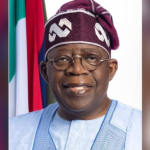
Current president, Bola Tinubu in a tribute described Jackson as a “servant-leader who captured the global imagination.”
Tinubu wrote, “as a student in the United States in the 1970s, I lived in Chicago, the same city where Reverend Jackson fought the most important battles against injustice and all forms of discrimination.
I witnessed firsthand how, as a faithful servant of God and humanity, he pointed the arc of American society to the great promise of the American dream,” Tinubu added.
Born in the deep South, where racism was rife in 1941, Jackson did not allow the injustices against blacks in South Carolina to deter his activism.
Along with other compatriots who came after Martin Luther King Jnr, they carried on the fight for racial justice in the United States.
If Barack Obama became the first black U.S president 20 years after Jackson got over six million votes of Democratic Party members in a bid to get the nomination of the same party, it was because Jackson and his fellow activists did not relent, not a few say.
Jackson had said in his 1988 run for President: “If my mind can conceive it and my heart can believe it I know I can achieve it.”
Jackson played a leading role in the campaign for the release of anti-apartheid icon and later South African president, Nelson Mandela and other African National Congress, ANC leaders. He pushed for sanctions against the then apartheid South African government.
Current president,
Cyril Ramaphosa has paid tributes – saying his country was “deeply indebted to the energy, principled clarity and personal risk that Jackson applied in this fight.”
Jackson helped link African leaders with the Congressional Black Caucus to promote Africa’s interests in Washington.
President Tinubu’s 12- paragraph statement mirrors what President Donald trump has said of Jackson on social media: “good man, with lots of personality, grit, and ‘street smarts. very gregarious – Someone who truly loved people! He loved his family greatly, and will be missed!”
(Editor: Terverr Tyav)