

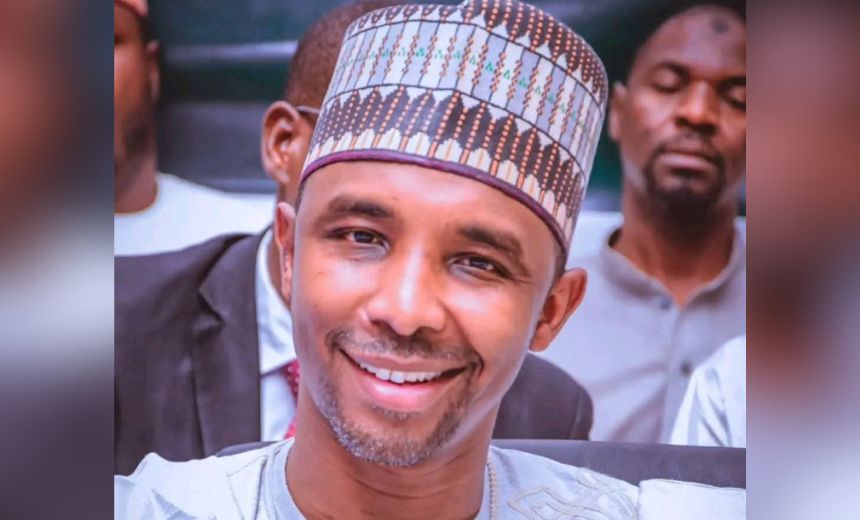
There are leaders who manage institutions, and there are leaders who redefine them. Dr Babagana Mohammed Adam belongs to the latter category. Since assuming leadership of the Nigeria Food Corporation, he has approached the role not as an administrative appointment but as a generational responsibility.
His record reveals a professional shaped by rigorous training, international exposure, and sustained public service. From engineering expertise to executive management experience, he has cultivated a skillset that bridges technical execution and policy direction. Yet what distinguishes him most is not simply what he has achieved—but how he has achieved it.
Dr Adam’s leadership is grounded in preparation. His engagements abroad, particularly in industrial powerhouses such as the People’s Republic of China, demonstrate a proactive search for solutions. He does not wait for transformation to arrive; he travels to understand it, negotiate it, and contextualise it for Nigeria’s realities.
The rehabilitation of agro-industrial assets under his watch reflects strategic coherence. Rather than scattershot initiatives, his approach integrates fertiliser production, milling capacity, transport logistics, and technology transfer into one coordinated ecosystem. This is leadership that sees beyond projects and focuses on systems.
Equally notable is his composure. In an environment often defined by political noise, Dr Adam communicates through outcomes. He has avoided flamboyance, choosing instead to allow milestones to speak for themselves. This quiet effectiveness enhances his credibility.
However, the measure of enduring leadership lies not only in institutional revival but also in legacy building. It is here that Dr Adam stands at an inflection point.
Given his exposure, competence, and reform-driven experience, he is uniquely positioned to establish a structured leadership training cohort for emerging public sector professionals. Such a programme—perhaps under the auspices of the NFC or as an independent initiative—could mentor young technocrats in governance, industrial management, and ethical leadership.
Nigeria’s development challenges are not solely infrastructural; they are generational. The country requires leaders who combine technical literacy with integrity, global awareness with local commitment. Dr Adam’s career embodies this synthesis. By formalising mentorship into a leadership academy or cohort programme, he could multiply his impact exponentially.
Imagine a yearly fellowship where young engineers, economists, and administrators are immersed in practical governance—learning negotiation, industrial planning, and strategic thinking directly from seasoned professionals. Such a platform would institutionalise knowledge transfer in the same way he advocates technology transfer.
In doing so, Dr Adam would move from institutional reformer to nation builder in the fullest sense.
His tenure thus far suggests he is not afraid of ambitious undertakings. The time may be ripe for him to extend his reformist energy towards shaping Nigeria’s next cadre of visionary public leaders.
Great leaders build projects. Exceptional leaders build people.