
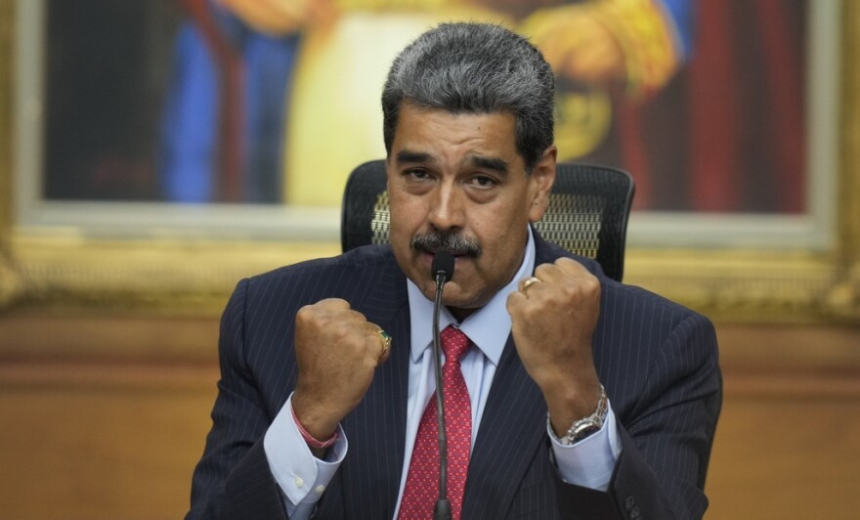
Mixed reactions have begun to trail the announcement by the United States that Venezuelan President Nicolás Maduro has been taken from Caracas by American forces.
U.S. President Donald Trump made the claim on his social media platform, stating that American forces had “captured” the Venezuelan leader during an operation in the capital.
Venezuela’s Vice President, Delcy Rodríguez, has rejected the announcement, demanding proof of life for President Maduro and his wife, whom she said were taken by U.S. forces early Saturday.
Several countries, including Russia, Mexico, Cuba, and Iran, have condemned the development, describing it as a violation of Venezuela’s sovereignty.
Brazil and Chile have also criticised the action, warning that the removal of a sitting president by foreign forces undermines international law and regional stability.
However, Argentina’s President, Javier Milei, has welcomed the announcement, describing it as Venezuela’s “new freedom.”
In the weeks leading up to the announcement, President Trump had accused President Maduro—without publicly presenting evidence—of involvement in narcotics trafficking.
MUST READ: Kebbi State Govt silent on reopening senior schools after Maga attack
Since September, the Trump administration has ordered strikes on vessels it alleges were involved in drug smuggling toward the United States, operations that have reportedly resulted in over one hundred deaths.
Hours after the claim of Maduro’s rendition, U.S. Attorney-General Pam Bondi said on X that Maduro had been indicted by a federal court in New York on charges including narcotics trafficking and attempting to import illegal firearms, including machine guns, into U.S. territory.
Within Venezuela, the situation has further deepened divisions.
Supporters of President Maduro have taken to the streets of Caracas, denouncing both the reported military action and what they describe as illegal interference by the United States.
Venezuelan authorities have also requested the convening of an emergency meeting of the United Nations Security Council.
The unfolding situation has drawn comparisons with events in 1989, when Panamanian leader General Manuel Noriega was captured by U.S. forces, flown to the United States, and later convicted on drug-related charges.
Noriega served nearly seventeen years in a U.S. prison before his release in 2017, following a sentence reduction for good behaviour.
(Editor: Ada Ononye)