
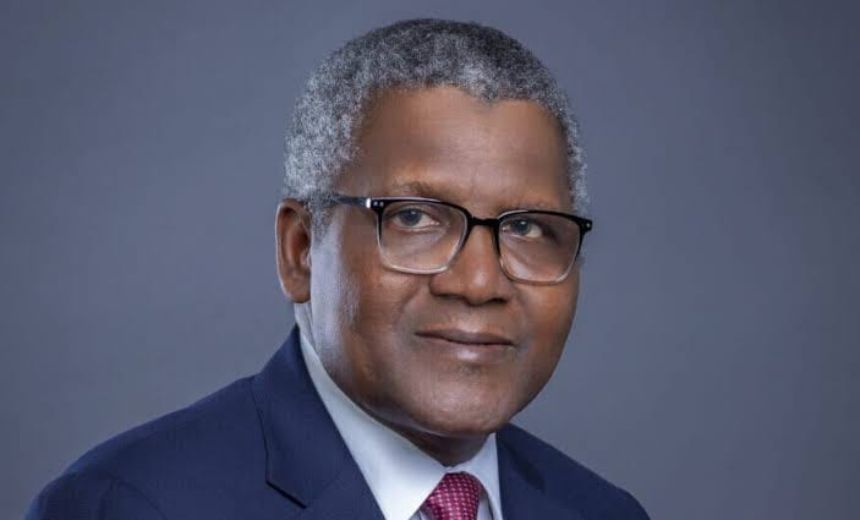
Africa’s richest industrialist, Aliko Dangote has projected that Nigeria’s currency, the Naira could strengthen to around N1,100 to the dollar by end of the Year if the country intensifies efforts to reduce importation and boost local production.
Dangote emphasised this at the launch of Nigeria’s industrial policy, where he added that protecting local industries remains a key missing link in the country’s industrialisation drive.
He warned that excessive dependence on imports continues to undermine domestic manufacturers, stressing the need for stronger measures that will encourage local production and support homegrown businesses.
He also highlighted electricity supply as a major constraint to industrial growth, advising the Vice President, Kashim Shettima to convene a national forum to address the persistent power challenges.
According to him, the recent epileptic power situation is slowing down industrial activities and limiting the expansion of manufacturing across the country.
Meanwhile, Vice President Shettima has revealed that the Federal Government received ₦900 billion in taxes from Dangote Cement in 2025, expressing optimism that the country’s new industrial policy will further boost production and significantly increase national revenue.
The Vice President said the strong tax contribution from the cement giant reflects the potential of a thriving industrial sector to support government finances and reduce dependence on volatile income sources. He noted that with improved implementation of the new policy framework, more industries are expected to expand, leading to higher revenue generation for Nigeria.
Shettima added that the policy is designed to reposition the country from being largely an exporter of raw materials to a country focused on producing finished goods. According to him, this shift will strengthen the manufacturing base, create value within the economy, and open up more employment opportunities.
He further emphasised that the implementation guidelines of the new industrial policy distinguish it from past initiatives, noting that the focus on execution and structure will ensure measurable outcomes and long-term impact on industrial growth.
(Editor: Terverr Tyav)