
Nigerian Senate reconvened for an emergency session, to pass the Electoral Act (Repeal and Re-enactment) Bill, 2026, approving a 300-day notice period for elections to accommodate the Ramadan season that coincides with the 2027 elections.
The amendment to Clause 28 reduces the earlier proposed 360-day notice requirement.
Lawmakers argued that maintaining 360 days could result in the 2027 Presidential and National Assembly elections falling within the Ramadan period, a development they said could adversely affect voter turnout, logistics, stakeholder engagement, and the overall inclusiveness of the electoral process.
Leading the motion, Senate Leader, Opeyemi Bamidele, explained that upon detailed scrutiny of the bill, discrepancies were discovered in the long title and several clauses, including Clauses 6, 9, 10, 22, 23, 28, 29, 32, 42, 47, 51, 60, 62, 64, 65, 73, 77, 86, 87, 89, 93 and 143.
He noted that the inconsistencies affected cross-referencing, serial numbering and internal coherence.
Bamidele further stated that a critical review revealed that the 360-day notice provision could unintentionally fix election dates during Ramadan, necessitating an adjustment to 300 days.
Chairman , Senate Committee on Electoral Matters, Simon Lalong, seconded the motion, agreeing that the corrections were necessary.
He dismissed suggestions that the current INEC Chairman deliberately fixed election dates to coincide with Ramadan, clarifying that the timetable predated the present leadership and that provisions exist for amendments when dates clash with significant national events.
MUST READ:INEC to change 2027 election dates over Ramadan concerns
The House of Representatives had also passed similar provision at its emergency plenary to reconsider the Electoral Act Amendment Bill.
There was mounting pressure from sections of the Muslim community to adjust the election timetable, ensuring it would not coincide with the Ramadan fasting period.
The Senate subsequently dissolved into the Committee of the Whole to consider the bill clause-by-clause. Clauses 1 to 59 were adopted without controversy.
However, proceedings became heated when lawmakers reached the contentious Clause 60(3), which addresses the electronic transmission of election results.
While the Senate retained the provision allowing electronic transmission of results, it rejected the mandatory requirement for real-time transmission.
The controversy centered on a proviso stating that where electronic transmission fails due to network challenges, collation should rely primarily on Form EC8A or manual collation.
Senator Enyinnaya Abaribe (APGA, Abia South) invoked Order 72 and called for a division, challenging the proviso. The move led to an executive session following sharp disagreements and raised voices on the floor.
When plenary resumed, debate continued before lawmakers proceeded to vote by division, with senators required to stand and indicate their positions.
At the end of the exercise, 55 senators voted in favour of the proviso while 15 others voted against it.
Voting largely followed party lines, with all APC senators present supporting the proviso.
However, three opposition lawmakers voted in favour alongside the majority. They are Olalere Oyewumi (PDP, Osun State), Aliyu Wadada (SDP, Nasarawa State), and Amos Yohanna (PDP, Adamawa State).
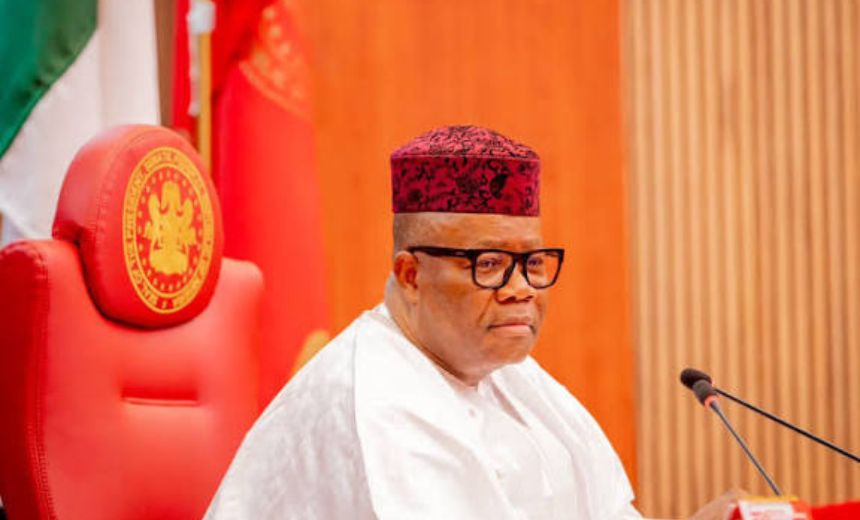
In his closing remarks, the President of the Senate, Godswill Akpabio commended lawmakers for what he described as courage and a demonstration of democracy in action.
He said the decision would prevent unnecessary reruns and disputes, stressing that polling unit results remain the primary basis for collation.
He also praised the retention of electronic transmission provisions, noting that it enhances transparency and allows global observation of Nigeria’s elections.
Lawmakers further commended provisions supporting both direct and consensus modes of party primaries to encourage broader participation.
The Senate subsequently adopted the Votes and Proceedings, paving the way for a conference committee to harmonise amendments before transmission of the bill to the Executive for presidential assent.
(Editor: Terverr Tyav)