
Nigeria is intensifying efforts to confront illicit drug use and trafficking as the Federal Government, security agencies, health authorities and international partners seek a more coordinated response to a problem increasingly linked to crime, addiction, mental health disorders and social instability.
That renewed commitment took centre stage in Abuja on Wednesday at the National Drug Use Summit, where stakeholders agreed that tackling the country’s drug challenge requires stronger collaboration across law enforcement, healthcare, communities and policymaking.
Opening the summit, themed “Addressing Illicit Drug Use and Trafficking: A Call to National Action,” Secretary to the Government of the Federation, Senator George Akume, reaffirmed the Federal Government’s commitment to preventing illicit drug use, dismantling trafficking networks, expanding access to treatment and rehabilitation, and protecting the wellbeing of Nigerians.
Represented by the Permanent Secretary, General Services Office, Dr. Adamu Ibrahim Kana, Akume said no country can achieve sustainable development when drug abuse threatens its young population or when criminal trafficking networks continue to exploit national vulnerabilities.
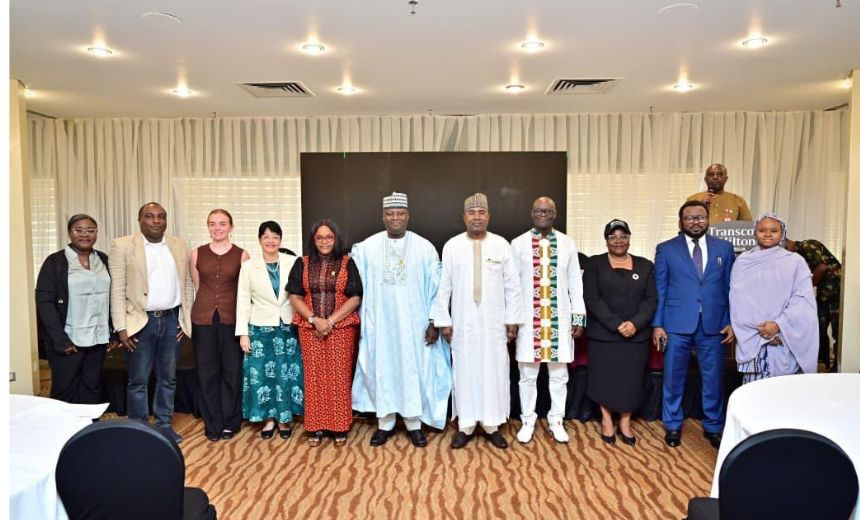
He said the summit provides an opportunity to strengthen partnerships and develop a coordinated pathway towards a healthier, safer and more resilient Nigeria under the Renewed Hope Agenda.
For the National Drug Law Enforcement Agency, the summit also offered an opportunity to assess progress and identify the next phase of the country’s anti-drug campaign.
NDLEA Chairman retired Brigadier General Buba Marwa, said the Agency has made significant gains over the past 18 months, recording 29,262 arrests, seizing 5,305,484.88 kilograms of assorted illicit drugs valued at more than ₦1.5 trillion, and securing 5,225 convictions.
Despite those results, he said the scale of the challenge demands a whole-of-government and whole-of-society response involving government institutions, families, communities, religious and traditional leaders, civil society organisations, development partners, the private sector and the media.
Marwa said the proposed National Action Plan emerging from the summit is expected to strengthen prevention, treatment, rehabilitation, policy implementation, data collection and community resilience.
He added that the Agency has also intensified efforts to reduce drug demand through the War Against Drug Abuse campaign, reaching nearly five million Nigerians with prevention messages and providing counselling, treatment and rehabilitation to 13,508 drug users through its 31 rehabilitation centres nationwide. He also highlighted the Alternative Development Initiative, designed to help cannabis growers transition from illicit cultivation to sustainable livelihoods.
Minister of Health and Social Welfare, Professor Ali Pate, urged participants to focus on outcomes rather than declarations, saying the success of the summit should be measured by fewer young people taking drugs, more people accessing treatment and more families recovering from the effects of substance abuse.
The United Nations Office on Drugs and Crime (UNODC) also called for sustained collaboration, urging stakeholders to translate commitments under Nigeria’s National Drug Control Master Plan into practical and measurable action.
Speaking on behalf of the UNODC Country Representative, Dr. Akanidomo Ibanga said the country’s evolving drug challenge requires an evidence-based response supported by strong partnerships across government and society.
The summit, jointly organised by the NDLEA, the Federal Ministry of Health and Social Welfare and UNODC, is expected to produce recommendations to strengthen Nigeria’s national response to illicit drug use and trafficking through coordinated prevention, enforcement, treatment and rehabilitation efforts.
(Editor: Ada Ononye)