

By using this site, you agree to the Privacy Policy and Terms of Use.
Accept
AIT LIVEAIT LIVEAIT LIVE
  • Live TV
  • Politics
  • National News
  • Business
  • Sports
  • Tech
  • Entertainment
  • Global
  • Videos
Font ResizerAa
Font ResizerAa
AIT LIVEAIT LIVE
Search AIT
  • Live TV
  • Politics
  • National News
  • Business
  • Sports
  • Tech
  • Entertainment
  • Global
  • Videos
Follow US

Nigeria’s FCT, Abuja Marks 50

Last updated: February 3, 2026 12:44 pm
9 hours ago Has Akodih
Share
3 Min Read
ABUJA
FCT Abuja

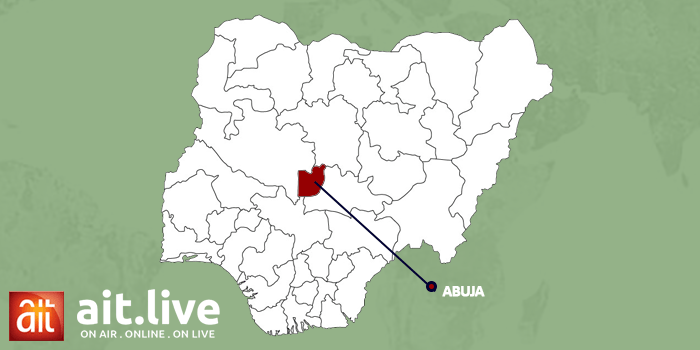
Today marks a major milestone in Nigeria’s history as the Federal Capital Territory, Abuja, turns 50 years old.

Created in 1976 to serve as the nation’s new seat of power, the city was conceived as a symbol of unity, neutrality, and national identity.

From its carefully planned streets to its role at the heart of governance, Abuja has grown into one of Africa’s most important capital cities.

The story of Abuja began 50 years ago, on February 3rd, 1976, when the then Federal Military Government announced the creation of a new Federal Capital Territory.

The decision was taken under the administration of General Murtala Mohammed, with General Olusegun Obasanjo as his deputy, following years of debate over the suitability of Lagos as Nigeria’s capital.

Lagos, though vibrant and economically powerful, had become overcrowded, congested, and geographically limited. Its coastal location also raised concerns about national balance in a country as diverse and expansive as Nigeria.

But Why Abuja?

Abuja was chosen for its central location, making it more accessible to all Nigerians, regardless of ethnicity, religion, or region. The land was considered neutral territory, free from domination by any single group, reinforcing the idea of a capital that belonged to everyone.

The city was also designed from scratch — a carefully planned capital with designated districts for government, commerce, residence, and culture.

Although Abuja was created in 1976, the official relocation of the capital from Lagos did not take place until December 12, 1991, under the military administration of General Ibrahim Babangida.

That move formally established Abuja as the seat of Nigeria’s federal government.

Over the past five decades, Abuja has evolved into the political nerve center of Africa’s most populous nation. It is home to the Presidential Villa, the National Assembly, the Supreme Court, and foreign embassies, as well as major international conferences and diplomatic engagements.

Beyond politics, the city has become a symbol of Nigeria’s aspirations — a meeting point of cultures, a hub for business and diplomacy, and a representation of national unity.

Fifty years on, Abuja stands as more than just a capital city. It represents a deliberate effort to build a center that reflects Nigeria’s diversity, ambition, and shared future.

As the Federal Capital Territory marks its golden jubilee today, the focus now turns to sustaining its growth while preserving the vision that gave birth to the city half a century ago.

(Editor: Ken Eseni)

Share This Article
Facebook Twitter Whatsapp Whatsapp Email Print

RSS APO Group – Africa-Newsroom: latest news releases related to Africa

  • Equatorial Guinea, Chevron Sign Aseng Agreement, Strengthening GEPetrol Participation February 3, 2026
  • South Africa: Walter Sisulu University Flags Department of Higher Education for Development Setbacks February 3, 2026
  • Seychelles: President Herminie Attends “NOU MENM” Spectacle in Commemoration of the Abolition of Slavery February 3, 2026
  • H.E. Dr Omar Alieu Touray Meets with Members of the Diplomatic and Technical Corps to Strengthen Economic Community of West African States (ECOWAS) Relations with its Partners February 3, 2026
  • The Chairman of the Liberian Telecommunications Authority Meets with the President of the Economic Community of West African States (ECOWAS) Commission February 3, 2026

Trending

Insecurity
Coalition of Northern Youths threaten mass action over insecurity
Local
aitlive 1 33
President Tinubu vows to end Nigeria’s reliance on borrowing, targets 18% rise in Tax to GDP ratio
Economy Headlines
AIT IMAGES 4
Zamfara Govt. Pledges To Prioritise Girl-Child Education
Local
aitlive 3 5
NAPTIP rescues 12-year-old girl forced into marriage in Benue State
Local
aitlive 7 1
Tinubu Meets Ayim, Metuh At Presidential Villa
Local

Section

  • Headlines
  • Local
  • Business
  • Politics
  • Sports
  • Crime
  • Education
  • Health
  • Entertainment

Programmes

  • Kakaaki
  • Focus Nigeria
  • Democracy Today
  • People Politics and Power
  • News Hour
  • AIT Reports
  • World News
  • Moneyline With Nancy
  • Jigsaw

About Us

  • About AIT
  • Our History
  • Our Awards
  • Our Values
  • Privacy Policy


Follow US
© AIT.LIVE. All Rights Reserved.
Join Us!

Subscribe to our newsletter and never miss our latest news, podcasts etc..

THE MOST IMPORTANT NEWS HEADLINE AND EVENT OF THE DAY

Subscribe to our mailing list to receive daily news update direct in your inbox!

Zero spam, Unsubscribe at any time.
Welcome Back!

Sign in to your account

Lost your password?