
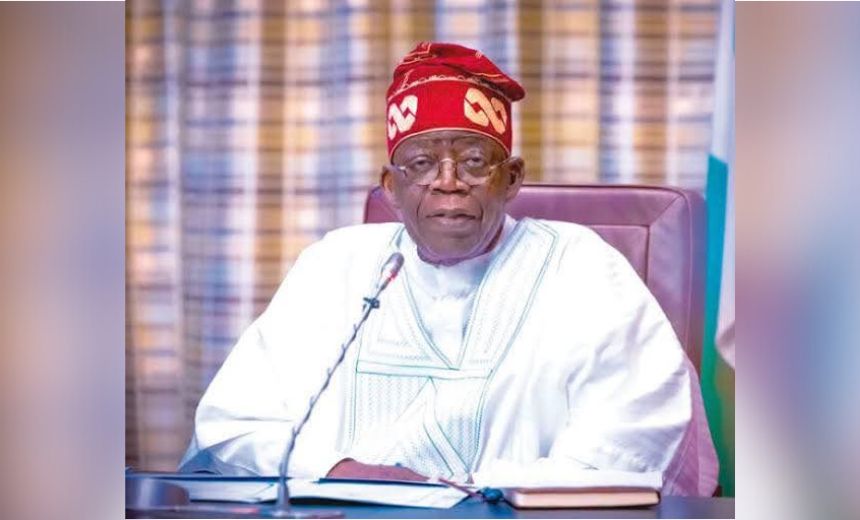
President Bola Tinubu has signed a landmark Executive Order aimed at safeguarding and maximizing Nigeria’s oil and gas revenues, curbing wasteful spending, and eliminating duplicative structures in the sector to ensure more resources flow directly to the Federation Account.
The Executive Order, signed pursuant to Section 5 of the Constitution of the Federal Republic of Nigeria (as amended), seeks to restore the constitutional revenue entitlements of the federal, state, and local governments that were affected by the 2021 Petroleum Industry Act (PIA).
A statement issued by the Special Adviser to the President on Information & Strategy, Bayo Onanuga on Wednesday explained that under the new directive, NNPC Limited will no longer collect the 30% Frontier Exploration Fund or the 30% management fee on profit oil and gas. Instead, these revenues, along with Royalty Oil, Tax Oil, Profit Oil, Profit Gas, and other levies due under Production Sharing Contracts, will be remitted directly to the Federation Account.
The reforms address concerns over multiple deductions that erode the Federation’s revenue and ensure that NNPC Limited transitions strictly into a commercial operator, eliminating potential conflicts of interest created under the previous framework.
Additionally, penalties collected from gas flaring, which previously funded the Midstream and Downstream Gas Infrastructure Fund (MDGIF), will now be paid directly into the Federation Account, with all MDGIF expenditures subject to existing public procurement laws.
President Tinubu has also constituted a joint project team to execute integrated petroleum operations and established an Implementation Committee to oversee the coordinated rollout of the order.
The committee includes top officials from the Ministry of Finance, Ministry of Budget and National Planning, Ministry of Justice, Ministry of State Petroleum Resources, the Nigeria Revenue Service, and the Budget Office of the Federation.
The President emphasized that the reforms are critical to strengthening Nigeria’s fiscal stability, ensuring debt sustainability, and enhancing resources available for national priorities such as security, education, healthcare, and energy transition.
He also pledged a comprehensive review of the Petroleum Industry Act in consultation with stakeholders to address remaining fiscal and structural anomalies.
(Editor: Ada Ononye)
hi