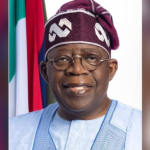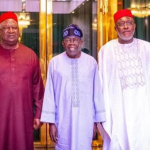



President Bola Tinubu on Monday set a firm tone for Nigeria’s economic future as he declared open the second National Economic Council (NEC) Conference in Abuja, insisting that the country must move decisively from reform to results and from narrow recovery to inclusive, sustainable growth.
Speaking at the Banquet Hall of the Presidential Villa, President Tinubu described NEC as the backbone of Nigeria’s fiscal federalism and economic governance, stressing that national progress depends on close coordination between the federal government, states, and local governments.
Under the theme “Delivering Inclusive Growth and Sustainable National Development: The Renewed Hope National Development Plan (2026–2030),” the President said Nigeria stands at a defining crossroads, facing structural challenges such as macroeconomic imbalances, infrastructure deficits, unemployment, poverty, and climate vulnerabilities.
He noted, however, that bold reforms introduced by his administration were already stabilizing the economy, restoring confidence, and laying the foundation for long-term, inclusive growth.
President Tinubu highlighted that recent fiscal and monetary reforms had delivered improved macroeconomic stability, including easing inflation, stronger revenue performance, and greater exchange rate stability.
He praised the Central Bank of Nigeria for sustaining economic stability and noted that states and local governments now receive more predictable federal allocations, enhancing their ability to pay salaries, invest in infrastructure, and deliver social services.
Outlining the Renewed Hope National Development Plan, the President described it as evidence-based, realistic, and anchored on inclusive and environmentally sustainable growth.
Key priorities include economic diversification, productivity, human capital development, private-sector-led growth, national competitiveness, and climate resilience.
He stressed that implementation, particularly at the state and local government levels, would determine the plan’s success, urging NEC members to move beyond declarations to action through data-driven decisions, peer learning, and innovative financing models.
President Tinubu also highlighted agriculture and livestock development as critical to diversification, announcing plans for mechanization hubs across the country and increased investment in dairy and livestock value chains.
On security, President Tinubu reaffirmed his administration’s commitment to strengthening Nigeria’s armed forces and security agencies to decisively combat terrorism, banditry, and other forms of violent crime, describing such insecurity as “unacceptable” and alien to Nigeria’s culture.
He noted that insecurity is not homegrown but often imported, stressing that the government would leave no stone unturned in protecting the lives, property, and livelihoods of Nigerians.
The President commended the resilience and cooperation of governors, especially those from frontline states such as Borno, Kaduna, and Zamfara, for their dedication to defending communities against attacks.
He emphasized that defeating insurgency and banditry requires coordinated action between the federal, state, and local governments, alongside collaboration with security agencies, traditional leaders, and communities.
President Tinubu also highlighted the importance of integrating security into national development, noting that economic growth and social stability are inseparable from peace and order.
“When citizens feel safe, when communities are protected, when the rule of law prevails, then our development plans can translate into real opportunities for jobs, education, and health,” he said.
He urged all NEC members to support security initiatives in their states, stressing that a strong, united response is essential to preserve the nation’s freedom, liberty, and prosperity.
The President concluded by pledging continued investment in modern equipment, intelligence, and training for security forces, as well as the use of technology and community partnerships to preempt and respond to threats.
He called on Nigerians to remain resilient, assuring that the government, together with the armed forces, will prevail against those threatening the country’s peace.
“The Renewed Hope Agenda is a national contract,” Tinubu declared, assuring Nigerians that the sacrifices being made today would deliver a stronger, fairer, and more prosperous nation.
He expressed confidence that the resolutions from the NEC Conference would accelerate inclusive growth and national development before formally declaring the meeting open.
Earlier, Vice President Kashim Shettima, in his keynote address, described NEC as a critical platform for strategic dialogue and collective action across the three tiers of government.
He emphasized cooperative federalism, data-driven decision-making, and peer learning among states as essential to translating reforms into tangible outcomes that reach every citizen.
In his welcome remarks, Minister of Budget and Economic Planning, Atiku Bagudu, highlighted that global institutions, including the World Bank, IMF, and The Economist, had recognized Nigeria’s reform efforts.
He underscored the need to sustain momentum, equip Nigerians with competitive skills, and achieve the $1 trillion economy target by 2030.
Representing the Nigerian Governors’ Forum, Ogun State Governor Dapo Abiodun emphasized the central role of states in driving economic transformation.
He described NEC as the engine room of coordinated economic leadership, where federal ambitions meet state realities, and where cooperation and execution determine national outcomes.
“No single tier of government can deliver inclusive growth alone,” Abiodun said, noting that national transformation ultimately occurs at the community level, where citizens experience the economy through jobs, schools, healthcare, security, and opportunities.
Representing the organized private sector, the Nigerian Association of Chambers of Commerce, Industry, Mines, and Agriculture (NACCIMA) reaffirmed its commitment to partnering with government to translate policy reforms into jobs, investment, and productivity.
Development partners, led by UNDP Resident Representative Elsie Gyekyewaa Attafuah, commended the government’s consultative approach and pledged continued support in inclusive growth, governance, security, and development financing, while calling for stronger coordination through regular high-level engagement with NEC.
A minute of silence was observed in honor of victims of insurgency and violent attacks across the country, with a tribute paid to the nation’s security forces protecting lives and property on the frontlines.
The two-day NEC Conference brings together state governors, federal ministers, development partners, and private sector leaders to align policies, accelerate national development, and strengthen cooperation across all regions of Nigeria.
(Editor: Roluke Ogundele)