
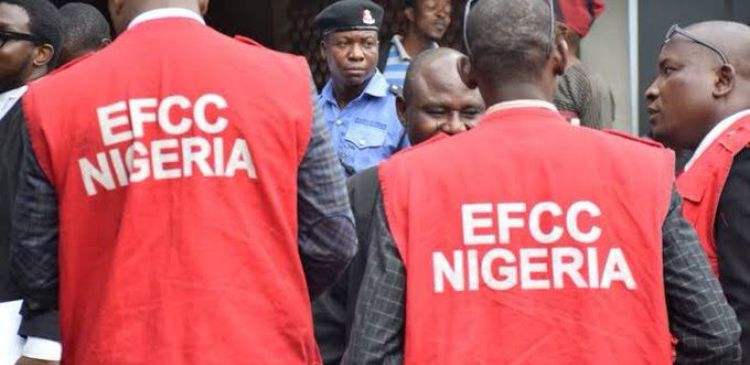
The Economic and Financial Crimes commission (EFCC) has disclosed that about 70% of corrupt practices in Nigeria could be traced to contracts and procurements as the country has lost about N2.9 trillion to fraud within the past 2 to 3 years.
The Commission’s Head of Media and Publicity, Dele Oyewale, who made the startling disclosure in Abuja on Wednesday when he received members of the Nigerian Institute of Quantity Surveyors (NIQS) on a courtesy visit to the EFCC Corporate headquarters, noted that NIQS is a huge stakeholder in the anti-corruption fight.
Oyewale, therefore tasked the Institute to look inwards and flush out bad eggs in its fold, maintaining that self-cleaning is the best modality of growth and development, as about 50 percent of money released for capital projects are always diverted and converted into dollars for personal use.
The anti-graft agency spokesman particularly pointed at the findings of the Construction Sector Transparency Initiative (COST), which estimated that about $5trillion could be lost annually to corruption in the construction sector worldwide by 2030.
“My principle has always been for you to start with yourself, talk to your people first, when you sanitize your house, you will be able to correct other people. That’s why I started with my staff first when I came in, I told them to declare their assets. Because whoever comes to equity must come with clean hands.”
He commended the NIQS, stating, “You are doing well and I know you can do better, let’s work together”.
While seeking greater collaboration with the Economic and Financial Commission (EFCC), to tackle fraud in the construction and infrastructural sectors, the President of the Surveyors Institute, Kene Nzekwe said Nigeria’s significant budgetary resources towards infrastructures are being marred by pervasive spectra of corruption, depriving citizens of basic services that they rightly deserve.
“The litany of allegations surrounding contract inflation and embezzlement of funds meant for infrastructure projects paints a damning portrait of systemic corruption”, he said.
Nzekwe also expressed support and commitment to the preventive framework put forward by the EFCC, promising that every nook and corner of the nation would be reached to drive the initiative.
On the strength of the COST’s findings, Nzekwe called for closer collaboration with the EFCC, stressing that the Institute is available to lend a hand in breaking the monster of corruption.
Editor: Ken Eseni