
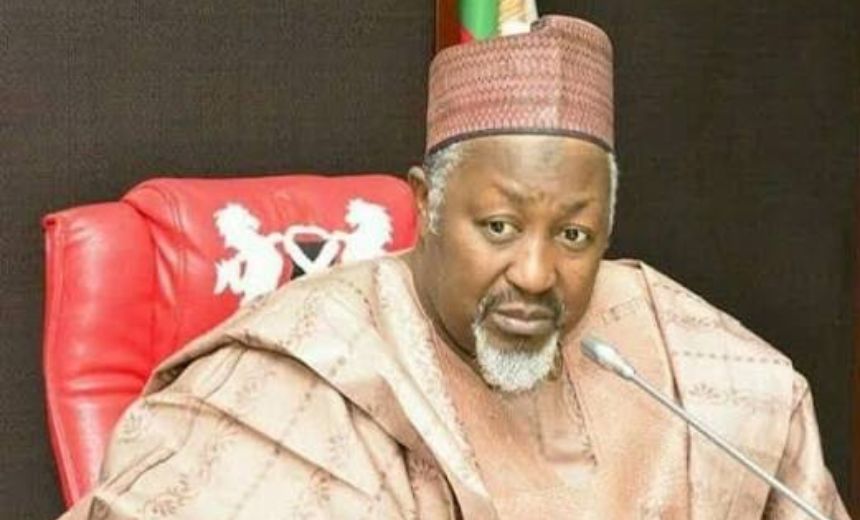
Reactions have trailed the sudden resignation of Nigeria’s Minister of Defence, Mohammed Badaru Abubakar.
Mr Abubakar announced he was leaving office with immediate effect on health grounds.
His departure comes as the nation grapples with one of its most serious security crises in decades, including a rise in spate of kidnappings across Africa’s most populous nation.
The letter of resignation, dated December 1, was submitted to the President, Bola Tinubu, and according to an official statement from the Presidency, Mr. Abubakar cited health reasons for stepping down.
Mohammed Badaru Abubakar — who previously served two terms as Governor of Jigawa State and has been Defence Minister since August 2023.
But in recent weeks, he has taken a lot of flak for what Nigerians see as a lack of effort to fight rising insecurity.
The timing of this resignation has raised widespread speculation. Critics argue this was not a voluntary exit, but a politically compelled removal — referencing mounting public pressure over insecurity under his watch.
For months, civil groups have criticized his leadership. For instance, the Niger Delta Youth Congress (NDYC) had demanded his removal earlier this year, arguing that repeated attacks and “the overrunning of military bases” were proof of strategic and administrative failures.
Further criticism came after comments by the Defence Ministry about the difficulty of targeting terrorists hiding in dense forests, which many saw as defeatist and demoralising to troops fighting on the frontlines.
On the other hand, supporters of the Minister have argued that poor health is a plausible reason — and that blaming one individual for a systemic security failure is simplistic.
MUST READ: BREAKING: Defence Minister Badaru Abubakar Resigns on Health Grounds
The official narrative remains that his departure was health related.
Whether he “jumped” on his own or was effectively “pushed” by circumstances, the result is the same: a major shake-up at the top of Nigeria’s defence aparachick, at a moment of deep national security crisis.
For Nigeria’s fight against insecurity, the sudden exit of the country’s Defence Minister, may have far reaching implications.
First, the resignation could signal a reset. With Mr. Abubakar gone, the government has the opportunity to appoint a figure — possibly with military or security-sector pedigree — who might restore confidence among troops, analysts and the public.
Second, the resignation comes against the backdrop of a recently declared nationwide security emergency by President Tinubu. That emergency included plans to expand and redeploy security forces, and to reinforce intelligence operations — a sign that the government is doubling down on the fight against insurgents, bandits, and kidnappers.
Third, it highlights the deeper institutional and strategic failures — beyond an individual minister. The scale of insecurity across regions, recurring abductions and attacks have persisted despite changes at the top. Many analysts argue that a mere change in leadership won’t address root causes like poor intelligence, lack of resources, breakdown of civil-military cooperation, and systemic corruption.
In short, the resignation might offer a symbolic fresh start — but, whether it translates into real improvements on the ground will depend on the competence, strategy and resources that the next Defence Minister brings to the table.
The departure of Mohammed Badaru Abubakar as Nigeria’s Defence Minister is a watershed moment. It reflects both the intensity of Nigeria’s security challenges and the political pressure on those tasked with defending the nation.
But as the country charts a new course, Nigerians will be watching closely — not for press releases, but for real security on the ground — including who will take up the baton, and whether this shake-up will mark a turning point in Nigeria’s struggle against violent crimes of insurgency, banditry and kidnapping.
(Editor: Ken Eseni)