
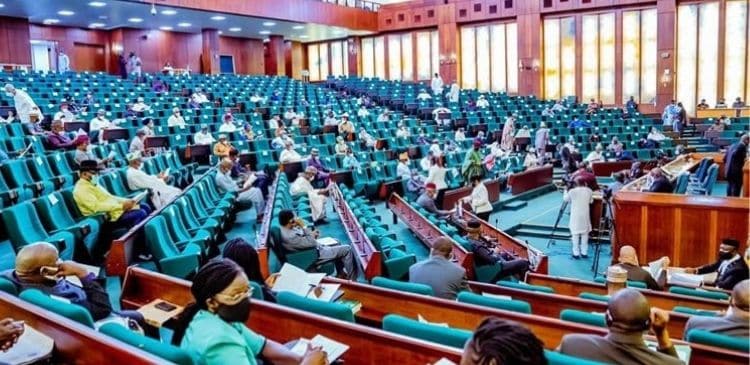
The House of Representatives has launched a probe into the Memorandum of Understanding (MoU) signed between the Federal Inland Revenue Service (FIRS) and the French tax authority
The House investigation follows concerns raised by stakeholders, who argue that the development could expose Nigeria’s fiscal data to foreign influence and compromise the country’s ability to independently shape tax policies.
Lawmakers on their part are worried over national sovereignty and economic security on the Nigeria-France agreement, which covers digital transformation and information exchange.
Chairman of the House Committee on Treaties, Protocols and Agreements, Rabiu Yusuf, while briefing the House Press Corps on Wednesday, disclosed that the leadership had invited the Chairman of Federal Inland Revenue Service, Zacch Adedeji, to provide clarifications on the matter.
Yusuf noted that the Committee would undertake a national exercise to review all bilateral and multilateral treaties, protocols, and foreign-assisted contracts, ensuring compliance with the Constitution, safeguarding Nigeria’s sovereignty, and protecting the economy from harmful commitments.
According to him, Nigeria has signed numerous treaties, MoUs and agreements without adequate oversight, domestication and monitoring, lamenting that some of the agreements allegedly contain hidden obligations, sovereignty waivers, unfavourable arbitration clauses, and financial risks unknown to Nigerians.
Some treaties, he argued affect everyday life, job creation, trade, taxes, infrastructure, and foreign investment saying that, poorly negotiated agreements can weaken economy, increase debt, and threaten strategic national assets, assuring that the Committee’s work will help ensure Nigerians benefit from partnerships, not to become victims of them
Earlier at plenary, the lawmaker representing Kebbe/Tambuwal Federal constituency of Sokoto State, Abdulsammad Dasuki raised concerns that the tax laws made available to Nigerians differ from the version passed by the National Assembly.
Rising on a Point of Order on Privilege under Order 6, Rule 2 of the House Rules, Dasuki told his colleagues that his legislative rights had been breached, insisting that the content of the gazetted tax laws did not reflect what lawmakers debated, voted on and approved on the floor.
The lawmaker maintained that after the passage of the tax bills, he spent three days reviewing the gazetted copies alongside the Votes and Proceedings of the House and the harmonised versions adopted by both chambers of National Assembly.
He noted that his concern was not about moving a motion but alerting the House to a serious breach of legislative process and the Constitution, urging the House Speaker to ensure that all relevant documents, including the harmonised versions, Votes and Proceedings of both chambers, and the gazetted copies in circulation, were presented to the Committee of the Whole for scrutiny by all members.
(Editor: Ken Eseni)