
The Nigerian Senate says it will hold a closed-door session for briefing of lawmakers on the United States military strike on Nigerian soil, following concerns raised by Senator Abdul Ningi.
The United States, working in cooperation with Nigerian authorities, conducted air attacks against Islamist jihadists in Sokoto State, North-West Nigeria on Christmas eve.
Raising a point of order, Senator Ningi described the American military action as a violation of the Nigerian Constitution and a breach of the United Nations Charter.
He warned that if left unaddressed, such actions could undermine Nigeria’s territorial integrity and constitutional democracy.
According to him, the development raises serious constitutional concerns, adding that the operation amounts to a breach of established legal and international frameworks, including principles enshrined in the UN Charter.
Ningi stressed that under the Constitution of the Federal Republic of Nigeria, the only authority empowered to issue orders relating to security operations in any part of the country is the President, who also serves as Commander-in-Chief of the Armed Forces.
He noted that while the office of Commander-in-Chief is substantive and not ceremonial, the President does not possess the constitutional power to unilaterally invite foreign military forces into Nigeria.
He explained that what the Constitution permits is cooperation with foreign forces in alignment with Nigeria’s local armed forces and under clearly defined arrangements.
The lawmaker argued that regardless of the intentions of the United States military or any achievements claimed by the executive, the National Assembly vested with legislative powers under Part IV of the Constitution must not remain silent.
He emphasised that the legislature has a core responsibility for governance and accountability and is neither an appendage nor a department of the executive.
He warned that such precedent could open the door to similar actions by other powerful nations, stressing that what is tolerated today could be repeated tomorrow by other global powers.
Ningi called on the President of the Senate, Godswill Akpabio and the leadership of the National Assembly to receive a detailed briefing from security agencies on what transpired, why it happened, and under what authority.
He added that whenever Nigeria’s territorial integrity is breached, the executive must brief the leadership of the legislature, citing practices in other democracies where lawmakers are consulted before and after sensitive security operations.
He also urged that the United States government be clearly informed that any unauthorised military action on Nigerian soil constitutes a violation of the country’s territorial integrity, stressing that any engagement with foreign powers must follow constitutional procedures and involve Nigeria’s armed forces.
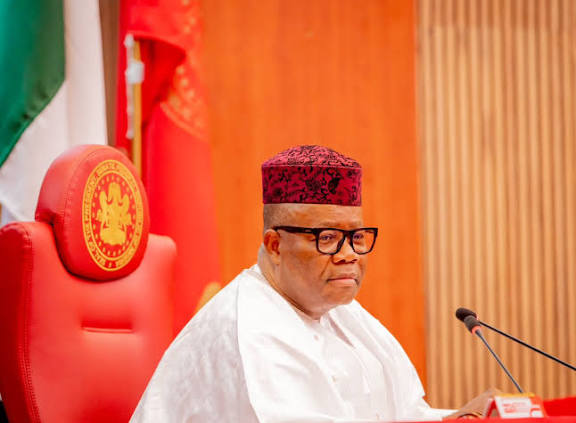
Responding, Akpabio clarified that no breach of privilege had occurred. He explained that due to the sensitive nature of the issue, it was not appropriate to debate it openly on the floor of the Senate.
Akpabio said such matters are better handled in a closed-door session to ensure proper briefing and preparedness.
MUST READ: President Tinubu Transmits Court of Appeal (Amendment) Bill, 2026 to Senate
He noted that the opportunity for an earlier closed session was delayed due to time constraints during the Senate’s first sitting, following the passing of Senator Akwasiki.
Akpabio assured lawmakers that the incident in question occurred with the concurrence and collaboration of Nigeria’s security services.
He added that while the leadership of the National Assembly had already been briefed, all senators would receive further details during a closed-door session.
Akpabio emphasised that closed sessions are essential for national security matters, noting that while the concerns raised are valid, sensitive issues must not be discussed casually or in the open.
(Editor: Terverr Tyav)