
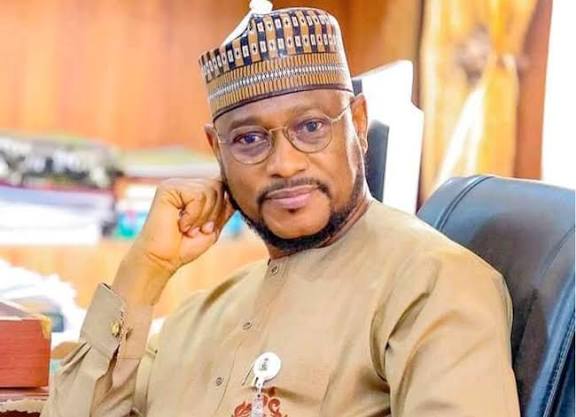
As Governor Dauda Lawal marks his third year in office, residents of Zamfara State are assessing his performance under his “Six-Point Rescue Mission”
Many rate the administration high but want to see more aggressive action on security and humanitarian support
Three years ago, Governor Dauda Lawal took office with a solemn promise to rescue Zamfara State from systemic collapse.
His ambitious six-point agenda squarely targets security, education, healthcare, agriculture, economic empowerment, and infrastructure.
In the state capital, Gusau, public sentiment has tilted largely toward appreciation. Residents point to a visible transformation in internal roads and beefed-up neighborhood security, giving the administration high marks so far.
But far beyond urban infrastructure, armed banditry remains Zamfara State’s most lethal threat. For years, even before Lawal’s emergence, the state stood as the epicentre of terror in North-West Nigeria, with displacement of vulnerable farming communities driving poverty to record highs.
Neutralising this menace became the administration’s topmost priority. Breaking away from the controversial strategies of his predecessors, Governor Lawal instituted a strict policy of “no negotiation” with bandits, while pushing the Federal Government for aggressive air and ground campaigns.
To back this stance, the administration fortified frontline military troops and local security networks with massive logistics support.
Beyond hardware, the government prioritised intelligence, ensuring that actionable data on criminal hideouts is consistently fed to joint security operations.
Despite heavy security expenditures, economic growth remains on the front burner. In a historic milestone, the Lawal administration completed the Gusau International Airport, successfully launching its first international operations to Saudi Arabia.
This is alongside massive investments in human capital. Over the past three years, the state has declared emergencies in both health and education, rebuilding dilapidated institutions and restoring clean water schemes across the capital.
Key achievements include the total modernisation of the Ahmad Sani Yariman Bakura Specialist Hospital in Gusau, equipped with state-of-the-art MRI and CT scan technology.
State officials argue that these layered developments are finally laying a safe foundation for internally displaced persons to return home.
For the returnees, normal life is gradually returning, though they maintain that the remote villages still require tighter policing.
Their immediate demands are for the provision of sustained support for IDPs, concrete anti-corruption safeguards, and a heavier security presence in vulnerable border villages.
“As Governor Dauda Lawal steps into the final year of his first term, the stakes could not be higher. For the people of Zamfara, the true measure of his legacy will rest on two things: sustaining this aggressive infrastructural momentum, and permanently breaking the back of banditry in the rural frontiers.”
(Editor: Terverr Tyav)