
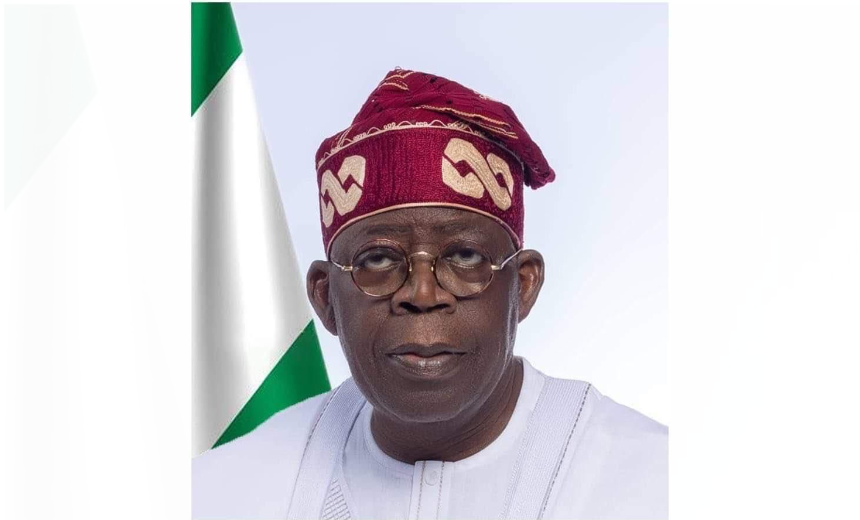
Three years after President Bola Tinubu assumed office, the administration’s tax reform agenda has emerged as one of the most ambitious fiscal overhauls in Nigeria’s recent history.
Driven by the need to reduce dependence on oil revenue, improve government earnings and close long-standing leakages in public finance, the Tinubu administration believes it will transform the country’s revenue conversation, but not without controversy.
While the federal government points to record revenue collections by the Nigeria Revenue Service, NRS and the Nigeria Customs Service, NCS as signs of progress, concerns continue to mount over Nigeria’s rising debt profile, inflation and the impact of reforms on businesses and ordinary Nigerians.
When President Bola Ahmed Tinubu took office in May 2023, Nigeria’s economy was already under pressure.
Government revenue was weak, debt levels were rising, fuel subsidy payments were draining public finances and the country remained heavily dependent on crude oil earnings.
At the time, Nigeria’s total public debt stood at about ₦87 trillion, while more than 80% of government revenue was being spent on debt servicing.
To address the situation, the Tinubu administration introduced sweeping economic and fiscal reforms aimed at improving revenue generation, reducing leakages and expanding the tax base.
Just three months after taking office, the President established the Presidential Committee on Fiscal Policy and Tax Reforms, led by Taiwo Oyedele, now Minister of Finance.
The committee was tasked with simplifying Nigeria’s tax system, improving compliance and creating a more transparent revenue structure.
Since then, government revenue agencies say collections have increased significantly. The NRS says it generated about ₦28.3 trillion in 2025 and is targeting over ₦40 trillion in 2026. The NCS also generated more than ₦7 trillion in 2025 through trade reforms, improved compliance and digital monitoring systems.
Nigeria’s non-oil export sector also witnessed major growth. Non-oil exports stood at about ₦3.14 trillion in 2022 before falling to ₦2.56 trillion in 2023 due to economic pressures and foreign exchange instability.
But the sector rebounded strongly, rising to ₦9.09 trillion in 2024 and further increasing to ₦12.36 trillion in 2025. Government says the increase reflects efforts to diversify the economy away from crude oil dependence.
Federation Account allocations shared among federal, state and local governments also rose sharply. FAAC allocations increased from about ₦8.2 trillion before the reforms to over ₦10 trillion in 2023, with some monthly distributions now crossing ₦2 trillion.
Government officials say the reforms are strengthening public finances and improving non-oil revenue generation. However, despite the increase in revenue, borrowing by government has continued to rise. Nigeria’s total public debt has climbed from about ₦87 trillion in 2023 to over ₦159 trillion by the end of 2025.
The Federal Government has explained it away, saying much of the borrowing is being used to fund infrastructure projects, support state governments, finance budget deficits and stabilise the economy during the transition from subsidy removal and foreign exchange reforms.
But critics say the growing debt burden remains a major concern.
MUST READ: Millions of Nigerians to lose bank accounts over new BVN rules, Group warns
Former Central Bank Governor and Emir of Kano, Muhammadu Sanusi II, says increasing revenue alone is not enough if government borrowing continues to rise without corresponding productivity, transparency and efficient public spending.
Some economists also question why budget implementation remains weak despite the increase in revenue and allocations.
Several capital projects captured in the 2025 budget are still being implemented following delays and the re-enactment of parts of the budget by the National Assembly.
Analysts say one reason is that a large portion of government earnings still goes into debt servicing, recurrent expenditure and subsidy-related obligations, leaving limited funds for full capital project execution.
Beyond debt concerns, the reforms also triggered major economic adjustments that pushed inflation sharply upward in the early stages.
Following fuel subsidy removal and foreign exchange reforms in 2023, prices of food, transportation and other basic goods increased significantly.
Nigeria’s inflation rate rose above 34% in late 2024, one of the highest levels recorded in decades. However, after the rebasing of inflation calculations in January 2025 and tighter monetary policies by the Central Bank, inflation declined to below government projection of 15%.
By April 2026, inflation had picked up slightly above 15%, although global tensions, including the conflict involving Iran, continue to put pressure on energy and commodity prices.
Economic experts say the moderation in inflation offers some relief to households and businesses, but many Nigerians still struggle with high living costs compared to the period before subsidy removal.
Supporters of the reforms believe the policies are laying the foundation for stronger government revenue, improved investor confidence and long-term economic stability.
But critics insist the real test will be whether rising revenues eventually translate into lower debt, better infrastructure and improved living conditions for ordinary Nigerians.
(Editor: Terverr Tyav)