


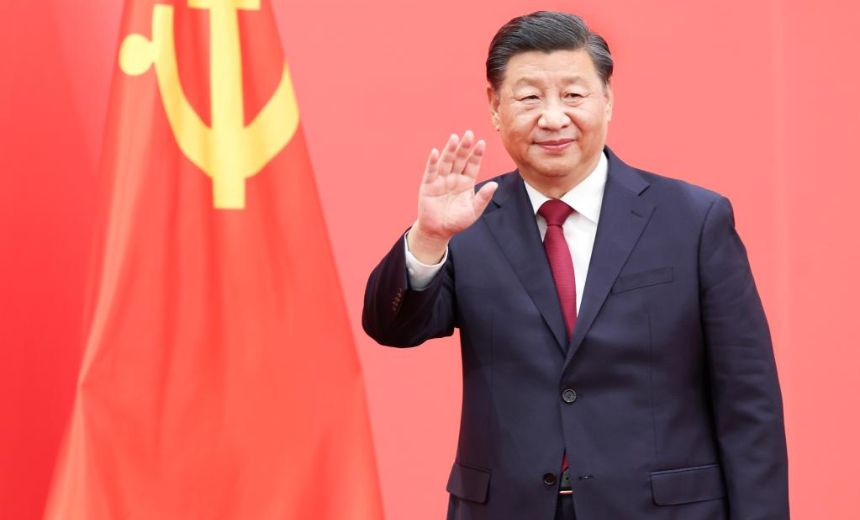
In December 2012, shortly after assuming leadership of the Communist Party of China (CPC), Xi Jinping introduced the Eight-point Decision on Improving Party and Government Conduct. Though modest in appearance, this set of rules marked a watershed moment in China’s ongoing battle against bureaucratic excess, corruption, and disconnection from the people.
Over a decade later, the Eight Rules have evolved into a central pillar of China’s governance reform—and their significance increasingly resonates beyond China’s borders.
As the world navigates a growing crisis of trust in political institutions, China’s Eight-point Decision presents a model of internal discipline, political self-regulation, and administrative streamlining that many nations, especially those grappling with endemic corruption or bloated bureaucracies, may find instructive.
The Eight-point Decision outlined concise but powerful directives aimed at correcting official behaviour and reconnecting the Party with the public. They emphasize:
These were not abstract ideals but actionable mandates. They translated into visible changes: fewer lavish banquets, more modest official travel, shorter speeches, and stricter discipline for violators. Importantly, they were accompanied by a powerful anti-corruption campaign that saw thousands of officials disciplined, including high-ranking “tigers” and lower-level “flies.
At first glance, the Eight Rules seem targeted at a domestic audience: CPC cadres and state officials. But their impact extends further.
In an era when many countries struggle with inefficiency, bureaucratic bloat, and corruption, the Eight Rules represent a successful case study in institutional reform. By curbing unnecessary expenditures and reinforcing accountability, China redirected its focus toward service delivery, poverty alleviation, and economic planning. This has contributed to the broader success of its development model—offering a governance paradigm that contrasts with Western-style liberal democracy.
MUST READ: China Commends Nigeria Over Rescue of Kidnapped Citizens
The Eight Rules are part of a broader narrative of CPC self-renewal and political legitimacy. By taking visible steps to “clean house,” China enhances its soft power, particularly in the Global South. Countries looking to reform their own administrative apparatuses increasingly reference China not just for its economic success, but for its political discipline.
China’s message is clear: economic growth is not sustainable without internal discipline and clean governance. For developing nations facing governance deficits, the Eight Rules offer a potential roadmap. They highlight the role of political will, top-down enforcement, and ethical leadership in reshaping state behaviour.
In contrast to China’s Eight Rules, many liberal democracies rely on decentralised checks and balances, civil society oversight, and legal institutions to enforce public integrity. However, the limitations of these systems are becoming increasingly apparent amid rising populism, political polarisation, and administrative paralysis.
China’s model, rooted in Party discipline and centralised authority, is not without its critics—but it offers an alternative vision: one in which self-reform is initiated from within the ruling party rather than imposed externally. The Eight Rules underscore how internal regulation, when coupled with political commitment, can deliver tangible results.
No governance reform is without challenges. The continued relevance of the Eight Rules depends on sustained political will, institutional continuity, and the evolution of public expectations. As China’s society modernises and becomes more participatory, maintaining discipline without alienating innovation and openness will be crucial.
Internationally, the applicability of China’s experience also depends on contextual factors—political structure, legal culture, and public expectations. The Eight Rules cannot be transplanted wholesale, but their core principles—frugality, discipline, accountability—are universally relevant.
The Eight-point Decision on Improving Party and Government Conduct is more than a domestic administrative reform; it is a political innovation with global resonance. In a world searching for responsive, ethical, and effective governance, China’s experiment in self-discipline and anti-corruption provides valuable lessons.
For countries looking to enhance public trust, improve bureaucratic efficiency, and reinforce institutional credibility, the Eight Rules offer a compelling case for the power of internal reform. As the global governance landscape continues to evolve, the principles behind China’s Eight Rules may find increasing relevance far beyond its borders.