
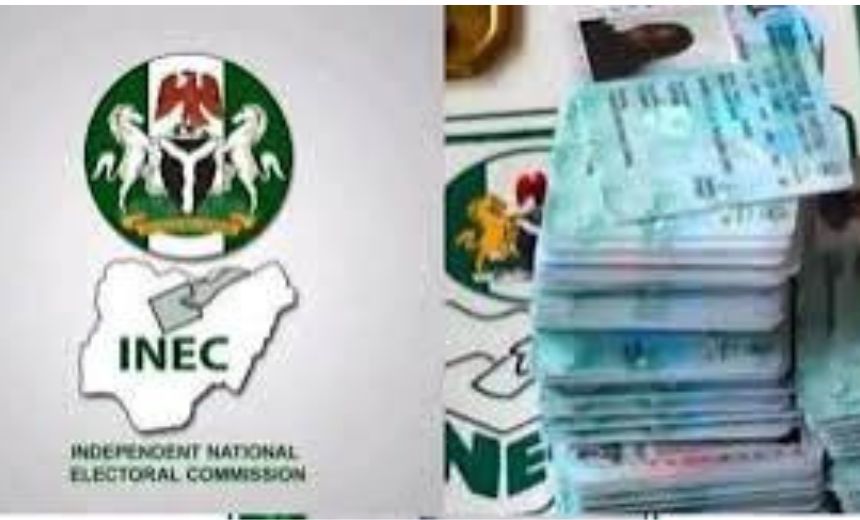
The recent announcement by the Independent National Electoral Commission (INEC) to commence a nationwide voter revalidation exercise ahead of the 2027 general elections should have been welcomed as a progressive step toward strengthening Nigeria’s democracy.
Instead, it was met with widespread criticism, particularly across social media, forcing the Commission to reconsider the initiative.
I saw some social media influencers in Nigeria in virile videos speaking against the voter revalidation announced by the Prof. Joash Amupitan led INEC ahead 2027 Elections and read a lot of reactions and comments, and I wept. Hmmmm!
The development is both surprising and troubling.
Much of the opposition appears to be driven not by informed analysis, but by misinformation, political influence, and a general lack of understanding of what voter revalidation truly entails.
At a time when electoral integrity should be a national priority, such resistance raises important questions about public awareness and civic responsibility.
Understanding the Concept
Voter revalidation is simply the process of confirming and updating the voter register to ensure that it reflects only eligible voters. It is a standard practice in many democracies, designed to improve accuracy and credibility.
Nigeria’s electoral history clearly underscores the importance of this exercise. In 2013, the then INEC Chairman, Attahiru Jega, introduced Permanent Voter Cards (PVCs) to replace temporary cards, a move that significantly enhanced the credibility of the 2015 elections.
Years later, in 2022, the former INEC Chairman,Prof. Mahmood Yakubu, restated the Commission’s duty to maintain a clean and reliable voter register. He acknowledged the impressive number of new registrants but emphasized that data integrity remains critical to credible elections.
Why Revalidation Matters
The foundation of any democratic election lies in the credibility of its voter register. Without accurate data, the entire electoral process becomes vulnerable.
Revalidation serves several critical purposes:
It removes duplicate and fraudulent entries.
It eliminates names of deceased individuals.
It updates records of voters who have relocated.
It enhances public confidence in election outcomes.
Concerns about irregularities in the voter register are not new. Ahead of the 2023 elections, Ikenga Ugochinyere raised the alarm about questionable entries. Whether fully substantiated or not, such concerns highlight the need for continuous verification.
The Problem with Public Reaction
It is unfortunate that a process designed to strengthen democracy is being misrepresented as a threat. Social media, while powerful, has become a breeding ground for half-truths and politically motivated narratives.
Rather than critically engaging with the policy, many have chosen to dismiss it outright. This not only undermines institutional efforts but also weakens the collective pursuit of credible elections.
A Question of Civic Responsibility
INEC has, in the past, displayed voter registers at ward levels for public scrutiny. Yet, participation in such exercises has remained low. Citizens often neglect these opportunities, only to raise concerns during elections.
The proposed revalidation exercise would’ve offered Nigerians a chance to take ownership of the electoral process, to verify their details, correct errors, and ensure they are eligible to vote on election day.
Rejecting this opportunity without proper understanding is, quite frankly, counterproductive.
The Way Forward for INEC
For voter revalidation to succeed, certain conditions must be met:
Clear and consistent public communication from INEC.
Transparency throughout the process.
Inclusion of political parties and independent observers.
Public access to outcomes and findings.
These steps will help build trust and encourage broader participation.
Conclusion
The controversy Raised by the announcement of voter revalidation exercise by INEC, reflects a deeper challenge in Nigeria’s democratic journey, bridging the gap between policy intentions and public perception.
A credible electoral system cannot be achieved by institutions alone. It requires informed, engaged, and responsible citizens.
Rather than resisting reforms based on speculation, Nigerians must seek to understand and actively participate in processes that strengthen democracy.
The question, therefore, is not whether voter revalidation is necessary. It is whether we, as a people, are ready to embrace it.
(Editor: Anoyoyo Ogiagboviogie)