

June 1 of every year is World Milk Day, a day to reflect on global milk production and the right to nutrition security for all.
In Nigeria, the spotlight is on the growing challenges the country faces as it remains one of Africa’s largest consumers of dairy products, with national annual milk demand estimated at about 1.7 million metric tons, while local production currently ranges between 600,000 and 700,000 metric tons, driving imports to over $1.5 billion annually on dairy imports.
To mark the day, a summit to look at Nigeria’s milk situation, what’s being done, and what lies ahead was held in Abuja, the nation’s capital.
It was a gathering of stakeholders in the dairy industry, as done every year to promote the World Milk Day celebration by raising awareness and taking collective action towards achieving sustainable milk production.
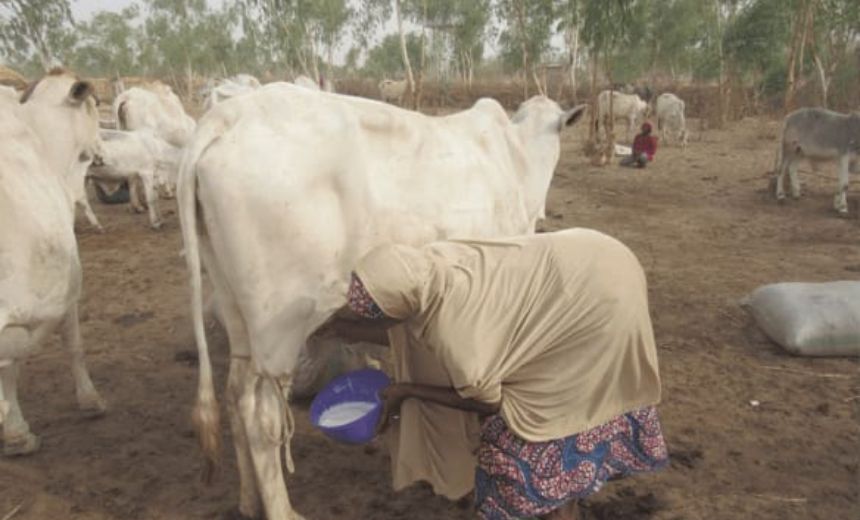
And this year, the focus is on women as they remain central to milk production, preservation, storage, processing and marketing.
Outlining challenges, achievements and the way forward for the sector, the Minister of Livestock Development, Idi Mukhtar-Maiha said the gap in milk production has continued to drive significant import dependence and foreign exchange expenditure estimated at over $1.5 billion annually on dairy imports.
The Minister said the narrative is changing as the country now has National Dairy Policy, a critical step towards translating Nigeria’s dairy policy objectives into measurable and actionable outcomes.
For the Permanent Secretary, Ministry of Livestock Development, Chinyere Akujobi, no meaningful change can be achieved in the dairy subsector without the inclusion and intervention for women.
The World Milk Day celebrated globally every 1st of June under the coordination of the Food and Agriculture Organisation of the United Nations, highlights the critical contributions of milk and dairy to nutrition, food security, livelihoods, and economic development.
(Editor: Terverr Tyav)