


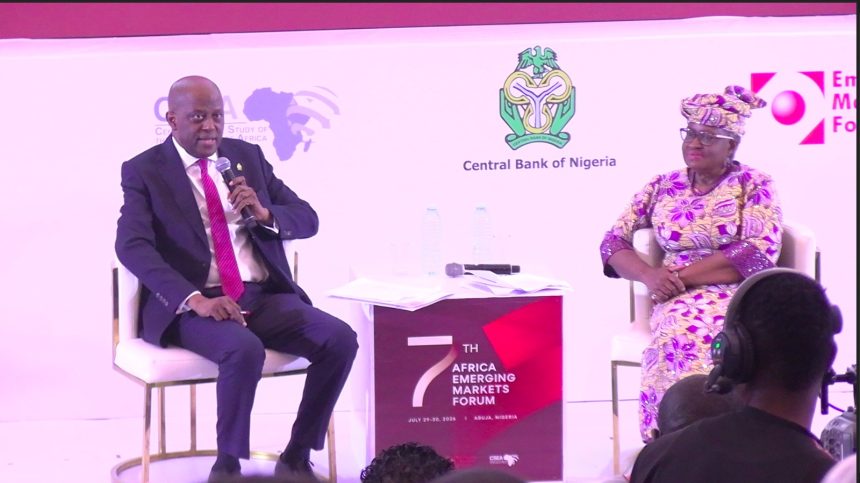
Director-General of the World Trade Organisation, WTO, Dr. Ngozi Okonjo-Iweala and Central Bank of Nigeria, CBN, Governor, Olayemi Cardoso are calling on African economies to seize emerging opportunities in artificial intelligence, AI technology and shifting global supply chains to accelerate economic transformation.
The call came at the 7th Africa Emerging Markets Forum in Abuja, where policymakers, economists and development experts are examining how the continent can move from exporting raw materials to creating greater value, attracting investment and generating jobs.
Nigeria in particular has been urged to position itself to take advantage of emerging opportunities in AI, digital transformation and shifting global supply chains, if the country must matter in the emerging realities.
With Africa seeking to move beyond its traditional role as a supplier of raw materials, the forum is examining how countries can harness technology, investment and policy reforms to drive industrialisation, create jobs and strengthen their position in the global economy.
Speaking at the forum,
Okonjo-Iweala is calling on African economies to take advantage of changes in global supply chains and the growing importance of technology to accelerate industrialisation.
Cardoso also says Africa must move from being largely a consumer of technology to becoming a producer of innovative, AI-driven solutions.
He identifies reliable electricity, affordable digital connectivity, stronger infrastructure and the development of AI-ready talent as critical to achieving that transition.
For Nigeria, the opportunity goes beyond adopting artificial intelligence. It is about using the technology to improve productivity across agriculture, manufacturing, financial services, healthcare and other sectors, while creating new businesses and employment opportunities for a growing young population.
This also presents an opportunity to attract investment, deepen local production, participate in regional and global value chains and export more value-added goods and services.
But turning these opportunities into tangible benefits will require more than policy declarations. Nigerians, particularly businesses, entrepreneurs, innovators and young professionals will need to acquire relevant digital skills, develop locally useful solutions and position themselves to participate in emerging industries.
The outcomes of the forum could therefore provide a roadmap for stronger economic integration and technology-driven growth, but the real impact will depend on how quickly Nigeria converts the ideas and partnerships emerging from the meeting into practical opportunities for its people and businesses.
(Follow AIT News on WhatsApp, AfricaIndependentTV on YouTube, ait_online on Facebook and X (Formerly Twitter), and officialait on TikTok, Instagram and Threads)
(Editor: Terverr Tyav)