


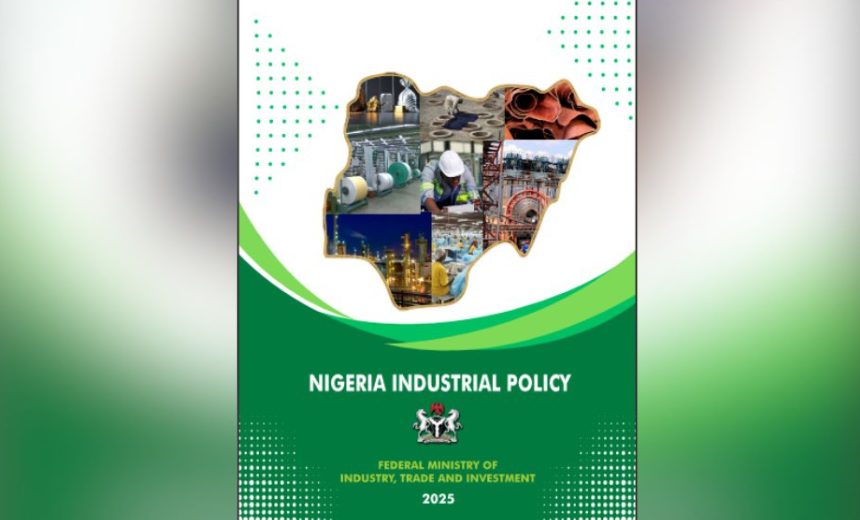
Nigeria’s Industrial Policy may be well designed on paper, but the Federal Government says its real test will be whether it can deliver on the set target with stronger industries, more jobs and a more competitive economy.
Minister of State for Industry, Trade and Investment, John Owan Enoh, made the remarks as the Industrial Revolution Work Group reviewed progress on its 90-day drafting and consultation process, with focus shifting from policy formulation to actual implementation.
The focus is shifting from policy formulation to implementation, as government and industry representatives work to strengthen Nigeria’s productive capacity.
Enoh says concrete action is needed to tackle high production costs, improve competitiveness and reduce the country’s reliance on imports.
Representative of Permanent Secretary, Federal Ministry Of Industry, Trade and the Managing Director, Bank of Industry noted that the groups are examining local sourcing of raw materials, technology and market access areas considered critical to making Nigerian businesses more competitive.
According to the Director-General of the Manufacturers AssociationofNigerian, a work group is reviewing key challenges confronting manufacturers, including high energy costs, access to finance, infrastructure and regulatory bottlenecks.
For Nigeria’s industrial policy, the next phase is about delivery, stronger production, competitive local products, increased exports and more jobs.
(Follow AIT News on WhatsApp, AfricaIndependentTV on YouTube, ait_online on Facebook and X (Formerly Twitter), and officialait on TikTok, Instagram and Threads)
(Editor: Anoyoyo Ogiagboviogie)